
Advertisements
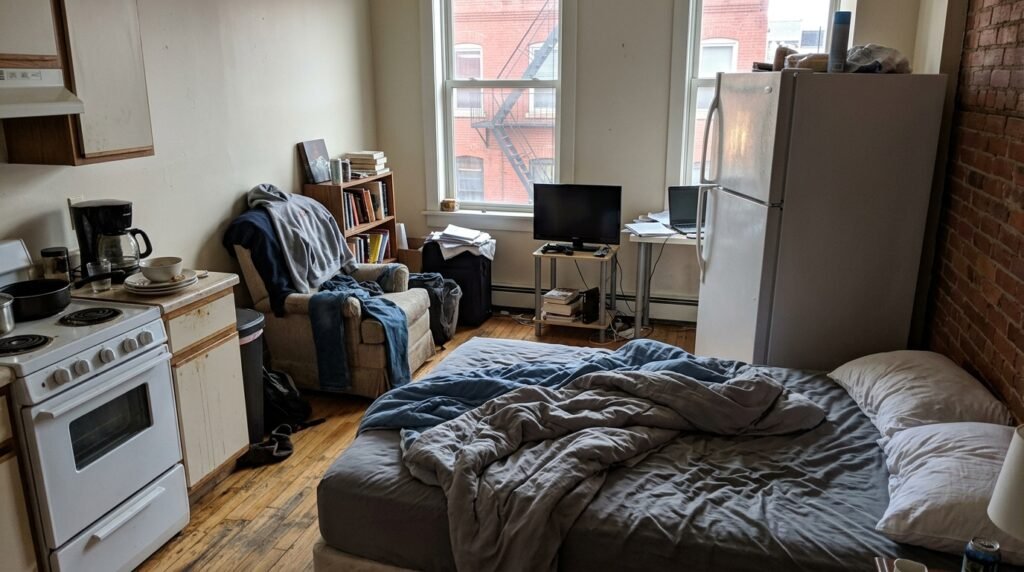
Waking up and making eye contact with your refrigerator feels incredibly strange. Living in a single square room forces your brain into a constant state of confusion. You eat, sleep, and watch television within the exact same four walls every single day. The lack of physical boundaries creates a chaotic living situation that resembles a messy hotel room.
My first solo apartment was a tiny studio in the LoDo neighborhood of Denver. I paid far too much for a great location and sacrificed basic floor space entirely. My mattress sat exactly three feet away from my oven door. I quickly realized I needed to invent invisible walls to save my own sanity.
The core logic of studio apartment zone ideas
You cannot build a drywall partition in a rented space without losing your security deposit. You must trick your eyes into seeing separate rooms using clever furniture placement. Defining specific functional areas gives an empty box structural purpose.
You have to assign a strict job to every single corner of the floor plan. The sleeping area must only serve as a place to sleep and rest. If you start eating dinner in bed, the imaginary lines disappear instantly. You can learn more about establishing these necessary mental boundaries in how to make a studio apartment feel like a real home.
Step 1: Anchor the sleeping space with an area rug
A bare wooden floor makes all your furniture look like a random pile of scattered pieces. You need a base layer to connect the items logically together. Slide a large area rug directly under your bed frame.
Anúncios
The rug should extend at least two feet outward from the sides and the foot of the bed. This creates an immediate visual island on the floor. The contrast between the soft rug and the hard apartment flooring draws a clear border around your sleeping zone.
Selecting the right rug pattern
Keep the bedroom rug relatively neutral to promote a calm sleeping environment. A loud, busy pattern demands too much attention and makes the room feel much smaller. Solid colors or subtle geometric lines work best in tight quarters.
You want the rug to quietly define the space without screaming for attention. Save your bold colors for smaller accessories like throw pillows or ceramic vases.
Step 2: Use an open bookcase as a room divider
Solid room dividers block all the natural sunlight from your single apartment window. You need a barrier that physically separates the space while letting light pass completely through. An open cube shelving unit solves this specific problem perfectly.
Buy a tall IKEA Kallax unit for around eighty dollars and turn it sideways. Place it at the foot of your bed to create a highly functional false wall.
The non-obvious shelving trick
Here is a very specific tip most people miss when styling open dividers. Leave the top two rows of cubes completely empty. Fill only the bottom cubes with heavy books or solid woven baskets.
Keeping the top half completely open allows the afternoon sunlight to reach the back of the apartment. It still hides your messy bed sheets from the main living area perfectly. This maintains an airy feeling while providing strict physical separation.
Step 3: Float the sofa to create a hallway
Pushing your sofa flat against the longest wall wastes massive amounts of square footage. It leaves a dead zone right in the middle of your layout. Pull the sofa out and place its back directly against your new bookcase divider.
This specific placement forces you and your guests to walk around the seating area. It creates an invisible hallway leading directly from your front door to the kitchen.
Directing foot traffic naturally
A good layout guides human movement without anyone noticing. Directing traffic properly forms a major part of learning small living room furniture arrangement ideas that open up the space. You want clear, unobstructed walking paths at all times.
Add a narrow console table directly behind the sofa if you skip the bookcase divider. This thin table provides a hard physical line between the living room and the bedroom.
Step 4: Implement studio apartment zone ideas with lighting
Relying on a single overhead dome light flattens the entire room visually. It makes the whole apartment feel like one giant, sad box. You need different light sources to activate different zones at different times of the day.
Place a tall metal floor lamp in the living room corner and a small ceramic table lamp next to the bed. Mount a plug-in pendant light directly above your dining table.
Controlling the evening mood
Turn off the living room floor lamp an hour before you go to sleep. Leave only the warm bedroom table lamp turned on. The dark living area visually disappears into the shadows entirely.
This simple lighting trick tells your brain that the living room is closed for the night. It creates a psychological separation that mimics walking into a totally different room.
Step 5: Define an entryway out of thin air
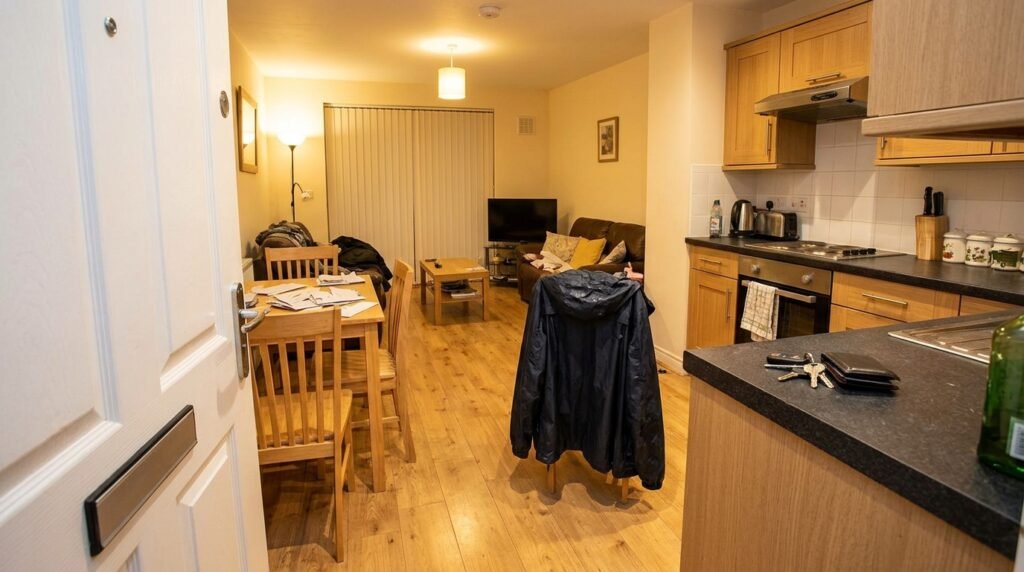
Most studios open directly into the main living space with zero transition area. You end up throwing your keys on the kitchen counter and your wet coat on a dining chair. This bad habit spreads clutter across multiple zones instantly.
Mount a row of three wooden hooks on the wall right beside your front door. Place a narrow two-foot runner rug on the floor directly beneath the wooden hooks.
Building a tiny drop zone
Install a small floating ledge right below the hooks to hold your daily mail. You just created a highly functional mudroom that takes up almost zero square footage.
Having a dedicated drop zone stops outside clutter from ruining your clean living room. It acts as a physical buffer between the outside world and your relaxing sanctuary.
Step 6: Separate the home office with a color block
Working from home inside a single room often ruins your work-life balance. Your brain never fully disconnects from your job when your laptop stares at you from the sofa. You must put your desk in a very specific, isolated corner.
Paint a large square of dark green or navy blue directly behind your desk. The painted shape acts exactly like an architectural alcove.
Creating a mental workspace
The color block tells your brain that this specific corner serves a completely different function. It separates your professional stress from your relaxing living room visually. If you need help staying productive, read about how to decorate a small home office that actually helps you focus.
You can use peel-and-stick removable wallpaper if your landlord bans actual paint. Just apply a few strips behind the monitor to anchor the workstation properly.
Step 7: Create a dining nook with a round table
A square dining table requires too much walking clearance on all four sides. It awkwardly cuts into the adjacent living room area and blocks the main walkway. You need furniture that softens the harsh right angles of the small box you rent.
Buy a small round pedestal table and push it near an empty window. The circular shape allows you to slide two chairs tightly underneath without blocking traffic.
Grounding the dining zone
Place a round jute rug directly under the table to define the eating area. Hang a large piece of art centered perfectly over the table to anchor the zone on the wall.
Eating your dinner at a proper table instead of on the sofa improves your quality of life immediately. It forces you to slow down and enjoy the specific zone you created.
Step 8: Use curtains as temporary walls
Sometimes you actually want a soft physical barrier to hide a messy bed when guests visit. You cannot drill heavy metal tracks into the ceiling of a rental unit safely. You can use a heavy-duty tension rod instead to avoid damage.
Wedge a long shower tension rod between two opposing walls near your bed. Hang a pair of cheap white linen curtains from the metal rod.
Hiding the sleeping area
You can pull the curtains completely closed when friends come over for drinks. This hides your unmade bed and creates a cozy, tent-like sleeping area for you later.
White linen allows natural light to filter through while blocking the direct view. It offers a cheap, elegant solution that you can take down in five minutes when you move out.
Step 9: Turn your clothing rack into a barrier
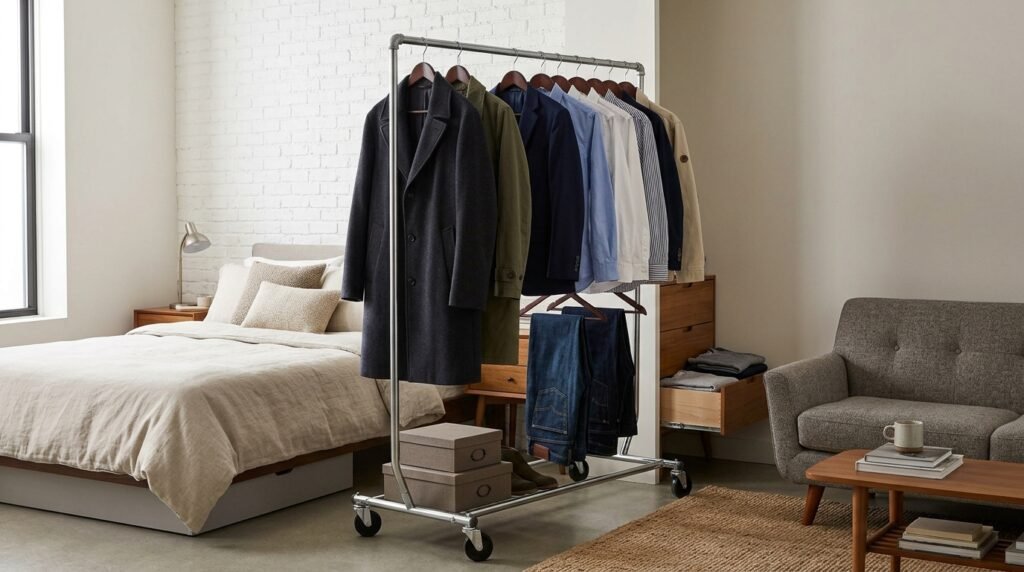
Studio closets rarely hold an entire four-season wardrobe comfortably. You probably own a rolling metal garment rack to handle the overflow of heavy winter coats. Do not shove this ugly rack against a random back wall.
Place the clothing rack perpendicular to the wall between your bed and your sofa. Hang your nicest, color-coordinated clothing neatly on the rack.
Styling a functional partition
The hanging fabric acts as a thick visual screen while keeping your favorite clothes accessible. This turns a storage problem into a highly practical room divider.
Keep the messy items like sweatpants and old t-shirts hidden in actual dresser drawers. Only display your structured jackets and clean button-down shirts on the exposed rack.
Step 10: Anchor the final layout with large-scale art
Scattering tiny picture frames across a long wall ruins the illusion of separate rooms. The art just floats aimlessly and looks incredibly messy. You must use large-scale art to define the exact center of each specific zone.
Hang one massive canvas perfectly centered above the back of your sofa. Hang a completely different, equally large piece directly over your headboard.
Finishing your studio apartment zone ideas
These large pieces act as visual pushpins on your walls. They tell the eye exactly where the living room stops and the bedroom begins. It makes the entire layout feel expensive, planned, and highly intentional.
Leave at least two feet of empty, bare wall space between the different art pieces. That blank gap provides a visual palate cleanser between your newly established rooms.
Grab a roll of blue painter’s tape right now and outline your ideal zones directly on the apartment floor. Take your coffee table and move it exactly three feet away from your bed frame tonight. Committing to a firm physical layout will instantly make your cramped apartment feel twice as large.

Fabiana Moura is a decor enthusiast and renter based in Denver, CO. After five moves in eight years, she became obsessed with making small spaces feel like home — without renovation, without a big budget, and without losing the security deposit. At Inovaty, she shares everything she’s learned along the way.