
Advertisements
Navigating a tight living area should not require athletic gymnastics. Tripping over the edge of a massive coffee table just to reach your sofa gets old fast. Cramming oversized furniture into a tiny box makes the walls close in on you. You need space to breathe and walk freely in your own home.
My first solo apartment in the Highlands neighborhood of Denver taught me a very hard layout lesson. I bought a giant used sectional on Facebook Marketplace for two hundred dollars. It completely blocked my front door and swallowed the entire room. I had to sell it two weeks later and start over with smaller pieces.
A tight floor plan requires strict discipline and careful measuring. You cannot buy pieces just because they look pretty in a massive retail showroom. Every single item must serve a specific function and fit the physical scale of your walls.
The right layout tricks your brain into seeing more square footage than actually exists. You have to manipulate the empty space between your pieces. Let us look at specific ways to stop blocking your own walkways and open up the room completely.
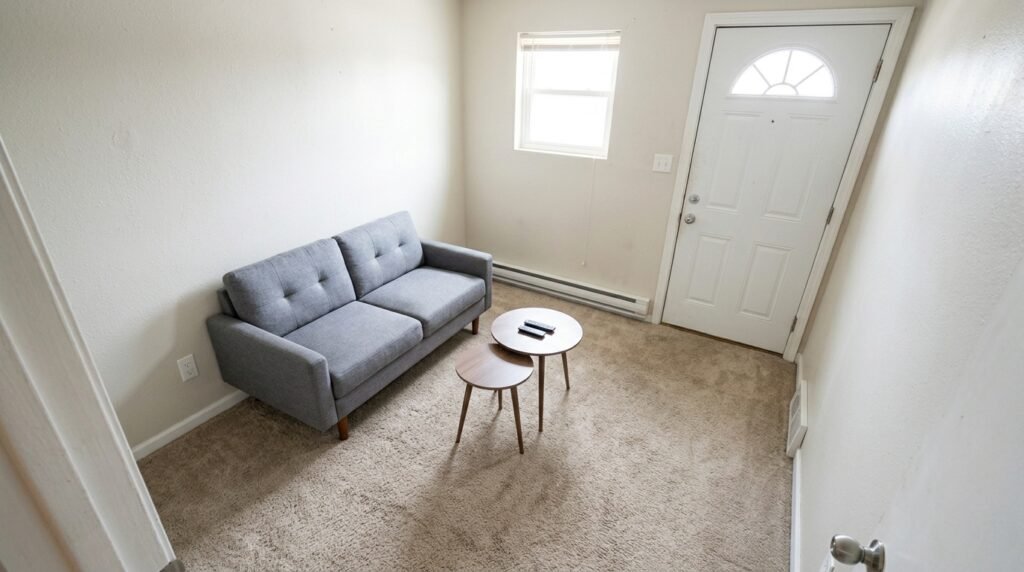
The rules of small living room furniture arrangement
Pushing all your furniture flat against the drywall remains a major mistake. It creates a dead, empty zone right in the middle of your floor. This makes the room look exactly like a formal doctor’s waiting area.
Anúncios
Pull your sofa forward by at least three or four inches. The physical shadow cast behind the furniture adds immediate depth to the room. It makes the arrangement feel deliberate rather than forced by the tight walls.
1. Float your main seating away from the walls
You can pull the sofa completely into the center of the room if your layout allows it. Place a narrow console table directly behind the back cushions. This gives you a place to drop your keys and creates a physical hallway behind the seating area.
This approach divides an open floor plan beautifully without building physical walls. It represents a core strategy when you want to know how to decorate a living room when you’re starting from zero. Defining zones is crucial for a comfortable home.
2. Swap the heavy coffee table for nesting tables
A solid wood rectangular coffee table acts like a massive roadblock. It visually weighs down the center of the room and traps your legs when you try to sit. You need maximum flexibility when floor space is limited.
Buy a pair of round metal nesting tables from Target or Amazon instead. You can pull them out when you have guests over for drinks and snacks. You simply slide them back together to clear the floor for your morning workout.
The hidden storage alternative
A large woven storage ottoman provides another excellent, flexible option. Target sells round water hyacinth ottomans that hold winter blankets completely out of sight. You just place a flat wooden tray on top to hold your coffee mug securely.
Round shapes soften the hard angles of a basic square apartment box. They allow you to walk around the center of the room without constantly bruising your shins.
3. Mount your television to the wall
Media consoles take up a massive amount of horizontal real estate. A bulky wooden stand visually eats up the entire wall it sits against. You can reclaim that lost square footage easily with basic hardware.
Buy a heavy-duty articulating TV mount and attach it directly to the wall studs. This pulls the large black screen up and away from the floor entirely. It makes the ceiling feel taller immediately.
Hiding the ugly cords
You can place a much thinner cabinet underneath the mounted screen to hold your internet router. A narrow shoe cabinet from IKEA works perfectly as a slim media console. It takes up half the depth of a traditional television stand.
Always use a cheap plastic cord cover to hide the black wires dropping down the wall. Paint the plastic cover the exact same color as your apartment walls to make it disappear completely.
Mastering small living room furniture arrangement with rugs
Many renters buy tiny rugs because they cost significantly less money upfront. A rug that only covers the center of the floor makes the room look chopped up. It visually shrinks the footprint of your entire seating area.
You need a large rug to define the boundaries of the room properly. An eight-by-ten rug usually fits most standard rental living rooms perfectly. It grounds the space and pulls the separate items together into one cohesive look.
Anchoring the furniture
Make sure the front legs of your sofa and your accent chairs sit firmly on the rug. This invisible border connects all the floating pieces together beautifully. It tells the eye exactly where the living zone begins and ends.
Leave the main walking paths around the seating area completely bare. The contrast between the soft rug and the hard floor reinforces the separate zones clearly.
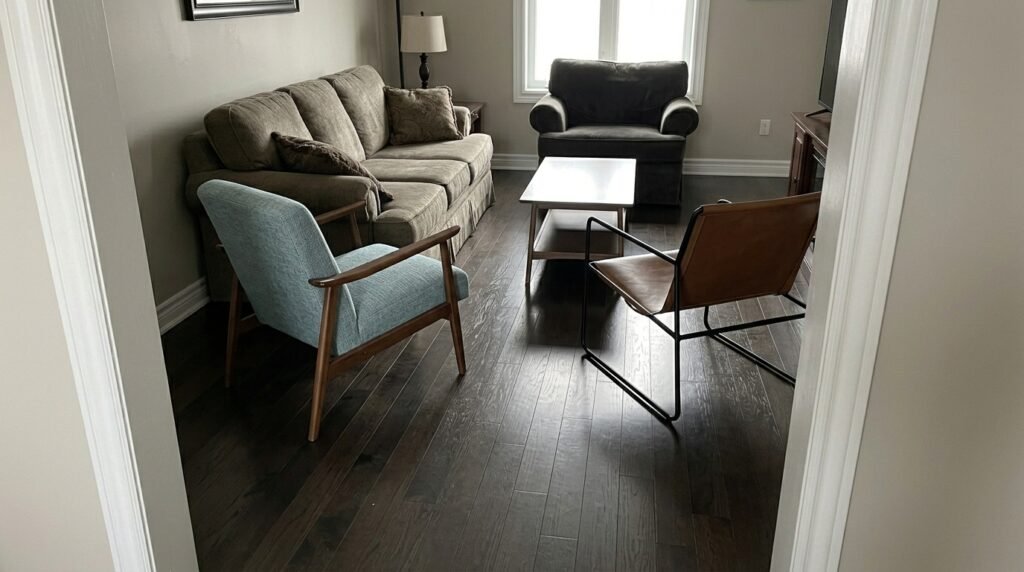
4. Choose accent chairs with exposed legs
Heavy armchairs covered in thick fabric block the line of sight across the room. A bulky chair sitting near the entryway stops the eye dead in its tracks. You want to see as much continuous floor space as physically possible.
Choose accent chairs featuring thin wooden or metal frames. Mid-century modern designs work exceptionally well in tight spaces for this exact reason. The open space beneath the seat lets natural light pass right through the furniture.
Angling for better flow
Never place your accent chairs perfectly parallel to the sofa. Angle them slightly inward toward the coffee table instead. This curved placement makes conversations feel much more natural and relaxed.
Angling the chairs also frees up the tight corners of the room for tall houseplants or a floor lamp. This specific tip works wonders if you are attempting the $50 living room refresh that actually makes a difference.
5. Use vertical shelving instead of wide bookcases
Short, wide bookcases eat up your usable wall space incredibly fast. You only have a few blank walls to work with in a standard apartment. You must look upward to solve your physical storage problems.
Install tall, narrow shelving units that reach almost to the ceiling. This draws the eye upward and maximizes the physical volume of the room. It provides maximum storage while taking up minimal floor width.
Keeping shelves visually light
Do not pack your tall shelves completely full of dark, heavy books. Leave plenty of negative space between your specific items. Mix light-colored ceramics and trailing plants with your reading material.
Understanding how to balance these high displays is a critical design skill. You can learn more about maximizing this upper area by reading about vertical space: the most underused trick in small apartments.
6. Replace bulky end tables with plug-in sconces
Squeezing a square end table between your sofa and the wall looks incredibly cramped. It forces you to shove the furniture tightly together into one giant block. You usually only need an end table to hold a reading lamp anyway.
Remove the end table completely and mount a plug-in wall sconce next to the sofa. This frees up at least two feet of floor space instantly. It provides perfect reading light without requiring a bulky piece of furniture.
Adding alternative drink drops
You still need a functional place to set your water glass down while watching television. Buy a tiny metal C-shaped side table that slides directly under the sofa frame. The flat top hovers right over the armrest for easy access.
These clever little tables take up zero additional footprint in the room. You just push them out of the way when you finish your drink.
7. Respect the main traffic paths
A successful small living room furniture arrangement prioritizes human movement above everything else. You should never have to turn your body sideways to walk through your own home. You need clear, unobstructed paths from the front door directly to the kitchen.
Walk through your apartment at a normal pace and pay attention to the tight spots. Take note of exactly where you bump your hip or have to slow down. That friction point tells you exactly what piece of furniture needs to move.
Creating breathing room
Maintain at least eighteen inches of clearance between your coffee table and your seating. Leave a minimum of three feet for main hallways and heavy traffic areas. These standard measurements prevent the room from feeling like a storage unit.
Sometimes you simply have to remove a piece of furniture entirely. Selling an unnecessary chair on an online marketplace might solve your layout problems in one single day. Less furniture always equals more visual space.
8. Keep the window area completely clear
Blocking your only source of natural light makes the room feel like a dark basement. Pushing a high-backed sofa directly against a window traps the incoming sunlight. It also makes opening and closing the blinds a frustrating daily chore.
Float your furniture away from the glass to let the light spill across the floor. This simple gap makes the room feel much deeper than it actually is.
Managing awkward radiators
Many older rentals feature massive metal radiators right under the windows. You cannot place soft furniture near them safely anyway due to fire hazards. Use that awkward gap to place a narrow, open console table instead.
You can place your two plants on top of the console to catch the afternoon sun. The open legs of the table will not block the necessary heat during the cold winter months.
9. Pick low-profile seating to extend sightlines
Tall furniture acts exactly like a brick wall in the middle of your apartment. A sofa with a massive, overstuffed back cuts the room in half visually. Your eyes stop at the fabric instead of traveling to the far wall.
Buy a low-profile sofa with clean, straight lines. A lower back allows you to see the entire span of the room from a standing position. This uninterrupted sightline creates a massive optical illusion of extra space.
Skipping the oversized rolled arms
Traditional rolled sofa arms consume nearly a foot of seating space on each side. They offer zero functional benefit and look incredibly bulky in a small room. Choose modern seating with thin, square track arms instead.
Thin arms give you more actual sitting room while taking up a smaller physical footprint. This makes a huge difference when every single inch counts.
10. Balance the visual weight evenly
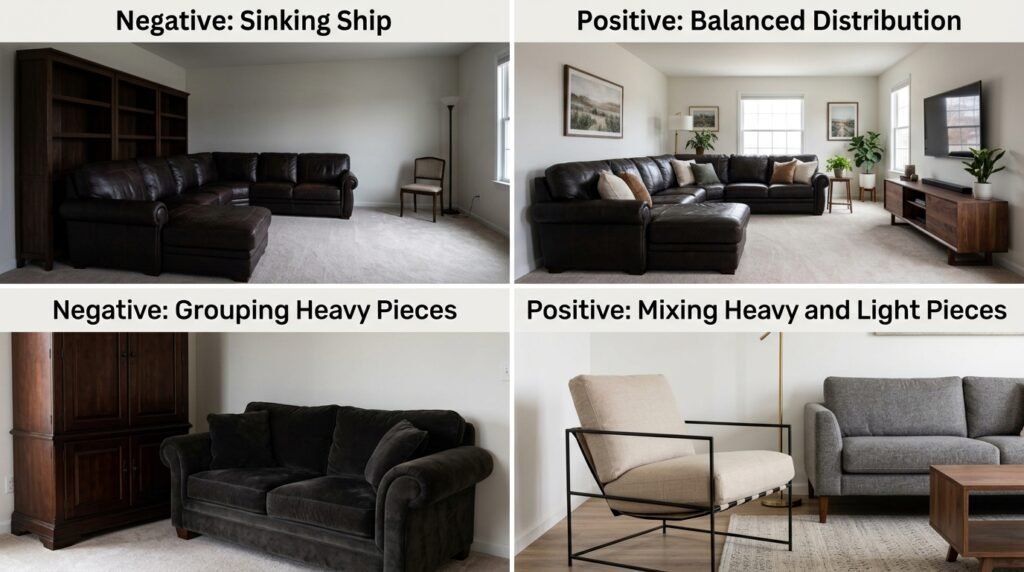
Placing all your heavy furniture on one side of the room makes the space look like a sinking ship. A massive sofa next to a solid wood bookcase creates extreme visual imbalance. The opposite side of the room will look cold and empty by comparison.
You must distribute the heavy pieces evenly across your available square footage. Put your sofa on one wall and your solid media console on the opposite wall.
Mixing heavy and light pieces
Never group two heavy wooden pieces right next to each other. Place a visually light, metal-framed chair next to a solid fabric sofa. This specific contrast keeps the room from feeling bogged down.
Balance a tall floor lamp with a low, solid side table on the opposite side. This up-and-down rhythm keeps the eye moving around the room naturally.
Customizing your small living room furniture arrangement
Living in a tight footprint forces you to become highly intentional with your belongings. You cannot keep items you do not actively use on a daily basis. You quickly learn to appreciate the efficiency of a well-planned room.
Do not be afraid to slide your furniture around on a random Tuesday night. Experimenting with different angles costs absolutely nothing and requires no permission. You will eventually find the exact setup that makes your specific rental function perfectly.
Push your sofa three inches away from the wall right now to create an instant shadow line. Move that heavy armchair out of the direct walkway before you go to bed tonight. Making one small physical change immediately shifts the energy of your entire apartment.

Fabiana Moura is a decor enthusiast and renter based in Denver, CO. After five moves in eight years, she became obsessed with making small spaces feel like home — without renovation, without a big budget, and without losing the security deposit. At Inovaty, she shares everything she’s learned along the way.