
Advertisements
Hitting your shin against a heavy wooden bed frame in the dark ruins your morning instantly. You try to squeeze past the dresser to reach your closet, but the drawers barely open. Sleeping in a cramped space feels more like living in a storage unit than a relaxing retreat. Every inch of floor space matters when your walls sit dangerously close together.
My fourth rental was a tiny apartment in the LoHi neighborhood here in Denver. The bedroom barely fit my full-sized mattress. I literally had to squeeze sideways through the door just to get inside the room. I spent the first two months feeling completely claustrophobic before I finally rearranged the furniture.
Many renters simply accept bad flow because they think they lack options. We assume a tiny footprint forces us to live uncomfortably. You actually have plenty of control over how the room functions. Finding the right small bedroom layout ideas completely changes how you experience your daily routine. Let us look at the most common arrangement mistakes and how to fix them permanently.
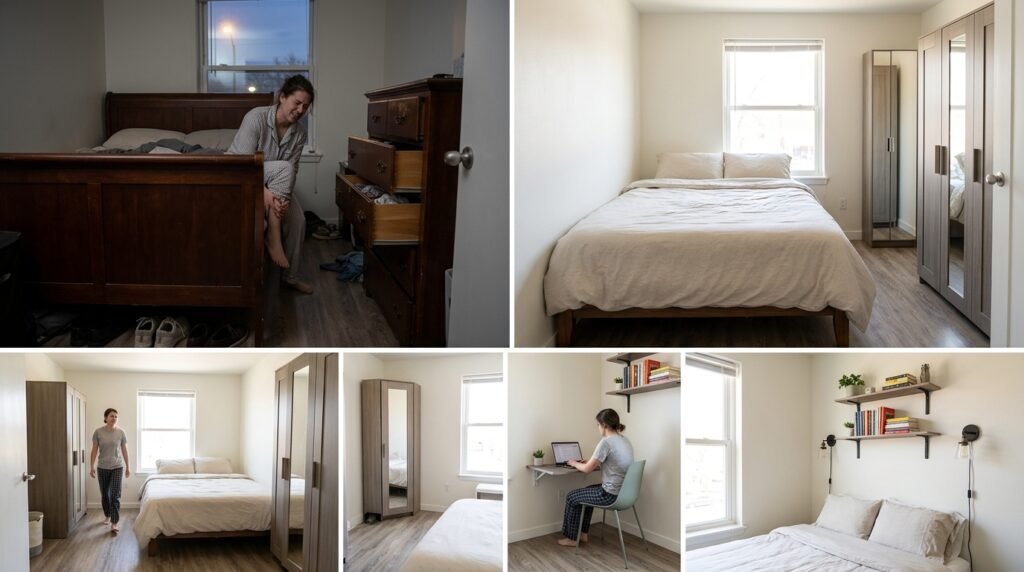
Mistake 1: Pushing the bed tightly into the corner
Shoving your mattress flat against two walls seems like the logical choice for saving space. It actually creates a massive visual imbalance in the room. Making the bed becomes an impossible daily chore. You end up crawling across the mattress just to pull the sheets tight.
Sleeping pushed against a wall also feels highly restrictive. It forces one person to climb over the other if you share the bed. This layout makes the room look like a childhood bedroom instead of an adult sanctuary.
Anúncios
The center float fix
Pull your bed directly into the center of the longest wall instead. Leave at least two feet of walking space on both sides. This creates proper symmetry and allows two people to enter the bed comfortably.
It makes the sleeping area look like a deliberate design choice rather than a desperate measure. Having space on both sides makes the mattress look smaller and the room look wider.
Mistake 2: Forcing bulky matching nightstands
Furniture showrooms always sell matching bedroom sets with two massive wooden nightstands. These heavy blocks consume crucial floor space next to your bed. They quickly turn into cluttered drop zones for old receipts and empty water glasses.
You do not need heavy drawers right next to your pillow. Traditional nightstands create visual walls that trap you inside the bed area. They also block the lower half of your wall outlets.
Slimming down your bedside storage
Swap those bulky cubes for narrow metal side tables or basic floating shelves. A simple piece of wood mounted to the wall holds a phone and a book perfectly. This keeps the floor totally clear and makes the room breathe.
You can also use a simple wooden stool as a nightstand. Target sells great raw wood stools that take up very little width. The open legs allow light to pass through, keeping the floor looking continuous and uncluttered.
Mistake 3: Wasting the hidden space under the mattress
A bed frame sitting directly on the floor wastes the most valuable storage zone in the room. You end up stuffing winter coats and extra blankets into a tiny closet. This forces your daily wardrobe to overflow onto a chair in the corner.
We often forget about the massive footprint our beds take up. Leaving that space empty underneath is a major missed opportunity. You must utilize every single square foot available in a tight rental.
Elevating your storage game
Buy a set of heavy-duty bed risers from Amazon for fifteen dollars. Lifting your metal frame just three inches higher creates a massive storage cavity. You can slide long plastic bins underneath to hold all your off-season clothing.
If you hate the look of exposed plastic bins, simply buy a tailored bed skirt to hide them. You can also read 10 under-bed storage ideas for tiny bedrooms for specific bin recommendations. Proper concealed storage keeps the visual noise in the room to an absolute minimum.
Mistake 4: Choosing heavy, dark furniture pieces
Solid cherry or dark mahogany wood visually weighs down a compact space. A massive dark dresser looks like a black hole sucking up all the available light. Dark colors advance toward the eye, making the walls feel much closer than they actually are.
Thrift stores are full of giant, dark wooden armoires and dressers. They sell for cheap because nobody wants to move them. Bringing these massive dark blocks into a tiny room is a huge mistake.
Lightening the visual load
Stick to light woods like birch or white painted furniture for your large items. IKEA sells the basic MALM dresser in crisp white, which practically disappears against a white wall. The lighter the furniture, the larger the room will feel to your brain.
You can also paint your existing dark furniture to save money. If your bed frame feels too heavy and dark, swap it out. Review these DIY headboard ideas you can make in a weekend for lighter, budget-friendly alternatives.
Searching for better small bedroom layout ideas with lighting
Table lamps take up the entire surface area of a small nightstand. Floor lamps steal precious floor space in the corners and trap dust behind them. Relying strictly on the harsh overhead dome light makes the room feel like an interrogation cell.
Good lighting completely alters the mood and physical perception of a room. Shadows in the corners make the walls close in. You need soft, layered lighting to make the space feel cozy and open.
Mounting your light sources
Here is a highly practical tip that saves massive amounts of space. Install plug-in wall sconces directly above your nightstands. You do not need to hire an electrician or drill massive holes.
Run the black cords straight down the wall and secure them with tiny clear Command clips. This completely frees up your bedside tables for functional items. It also draws the eye upward to make your ceiling appear much taller.
Mistake 5: Blocking the natural light source
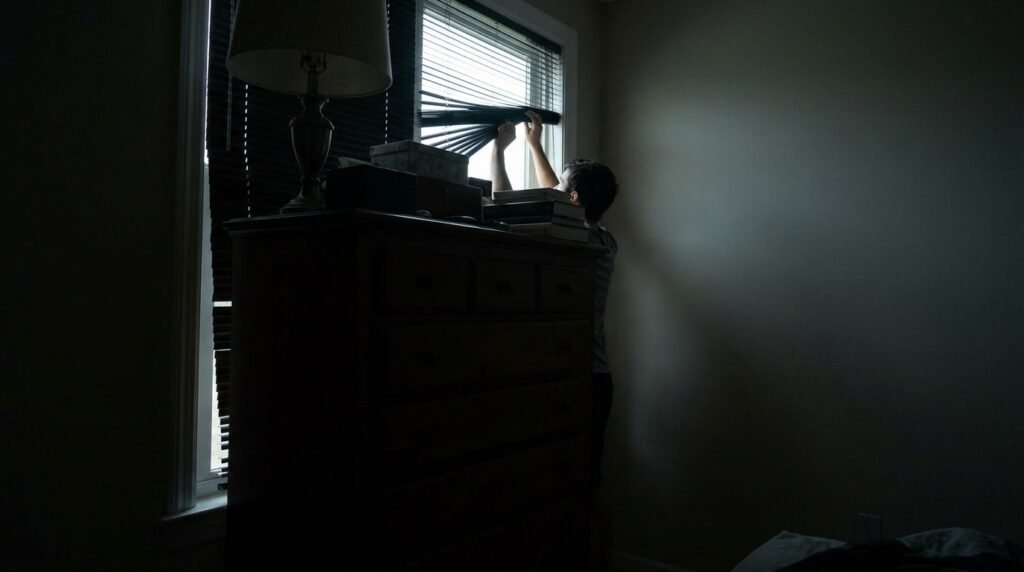
Putting a tall dresser or a high headboard directly in front of the window creates an instant cave. You block the natural sunlight from reaching the opposite side of the room. This makes the space feel dark, cramped, and entirely uninviting.
We often push furniture against windows when we run out of solid wall space. This block off your only connection to the outside world. It also makes opening and closing the window blinds a frustrating daily chore.
Prioritizing the light path
Keep the area immediately surrounding your window completely clear of tall furniture. If you must place your bed under the window, choose a low-profile metal frame without a headboard.
Let the window itself act as the focal point above your pillows. Hanging light, sheer curtains will diffuse the sunlight gently without blocking it. Maximizing natural light is the easiest way to make a tiny footprint feel expansive.
Mistake 6: Buying an undersized area rug
A tiny rug sitting at the exact foot of the bed chops the floor into awkward visual blocks. It looks like a random bath mat rather than a design element. This disjointed feeling ruins the flow of an otherwise well-planned layout.
People often buy small rugs because they cost less money upfront. A cheap, small rug actually harms the aesthetic of the room more than bare floors do. You need textiles to anchor the heavy furniture properly.
Anchoring the furniture properly
You need a rug large enough to sit under the bottom two-thirds of your bed. An eight-by-ten rug usually provides the perfect border of soft fabric around the mattress. It connects the bed to the floor and grounds the entire sleeping zone.
Pull the rug out far enough so your feet land on it when you wake up. This soft landing makes the room feel luxurious. It also helps absorb sound, which is crucial in older apartment buildings with thin walls.
Mistake 7: Creating chaotic color schemes
Painting each wall a different bright color overwhelms the senses in tight quarters. Busy wallpaper patterns with massive flowers make the walls aggressively close in on you. The bedroom should serve as a calm resting place, not an art gallery.
High-contrast patterns force your eyes to dart around the room constantly. This creates visual fatigue and anxiety. A small room requires discipline when it comes to paint and textiles.
Unifying the visual field
Pick a strict color palette of soft, muted tones. Warm whites, soft sages, and pale grays naturally recede from the eye. These gentle shades make the physical boundaries of the room blur slightly.
Keep your bedding simple and solid colored. If you struggle with picking the right shades, review these bedroom color combinations that work in small spaces. A unified color scheme is one of the most powerful small bedroom layout ideas you can implement.
Mistake 8: Hoarding decorative throw pillows
A bed covered in fifteen different throw pillows looks beautiful in a catalog photograph. In reality, you have to toss all those pillows onto your limited floor space every single night. You then have to step over them to reach the bathroom in the dark.
Throw pillows quickly turn from cute accessories to absolute nuisances. They gather dust on the floor and clutter up your limited walking paths. Your bedroom needs to function beautifully in real life, not just on camera.
Simplifying the bed styling
Limit yourself to your actual sleeping pillows and one single decorative lumbar pillow. This provides enough texture to make the bed look finished and styled. It also takes exactly two seconds to remove at night.
Place the single decorative pillow on your small chair or in a basket at night. This keeps your floor completely clear and makes your morning bed-making routine incredibly fast.
Mistake 9: Leaving the bedroom door bare
The back of your bedroom door represents twenty square feet of completely blank canvas. Leaving it bare means you are leaving easy organization on the table. In a tight space, you have to utilize every single vertical surface available.
We often complain about tiny apartment closets while ignoring the door right next to them. Using the door for storage frees up crucial drawer space in your dresser.
Maximizing hidden vertical storage
Hang a sturdy over-the-door organizer with clear plastic pockets. You can use it to store rolled belts, winter scarves, or even extra bathroom supplies. It hides completely when the door stays open against the wall during the day.
You can also mount a simple row of hooks over the door for heavy bathrobes and worn denim. It takes zero floor space and keeps bulky clothing off your accent chair.
Mistake 10: Using a massive reading chair
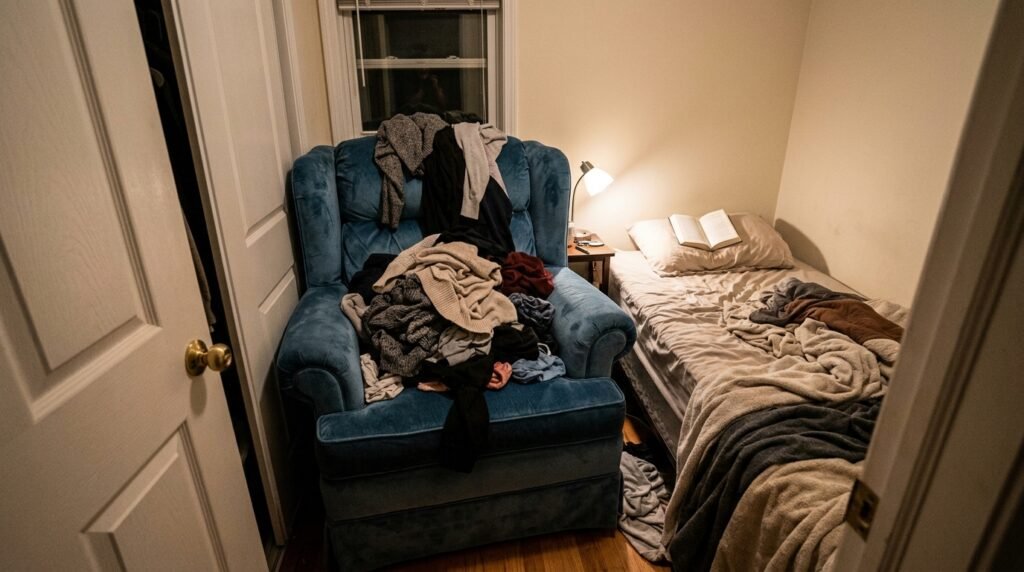
Putting a giant upholstered armchair in the corner of a tiny bedroom sounds cozy in theory. In practice, it just becomes an expensive, oversized laundry basket. It blocks the corners and makes the entire room feel choked.
You rarely actually sit in a bedroom chair to read. You usually just end up reading in bed anyway. The massive chair simply eats up three square feet of precious walking space.
Choosing functional seating
If you must have seating to put on your shoes, choose a narrow bench. Place a slim wooden bench firmly at the foot of your bed. This keeps the walking paths clear while providing a practical place to sit.
You can also buy a bench with a lifting lid to hide extra sheets and towels. Multi-purpose furniture remains the absolute best investment for tight rental units.
Pull your bed out from the dark corner right now and center it on the longest wall. Take the bulky table lamps off your nightstands and order two cheap plug-in wall sconces instead. Moving your furniture costs absolutely nothing and immediately changes how your room functions.

Fabiana Moura is a decor enthusiast and renter based in Denver, CO. After five moves in eight years, she became obsessed with making small spaces feel like home — without renovation, without a big budget, and without losing the security deposit. At Inovaty, she shares everything she’s learned along the way.