
Advertisements
Staring at a blank white wall in a 500-square-foot box feels intimidating. The overhead dome light casts harsh shadows across the cheap carpet. The kitchen cabinets look like they survived the early nineties. You want a home that feels warm and personal. Renting usually means you cannot paint the walls or rip out the flooring.
My third apartment in Denver was a tiny studio in Capitol Hill. The layout resembled a bowling alley with a kitchen stuck to the side. I lacked the budget for fancy furniture. I needed solutions that protected the walls and my bank account.
Over the past eight years, I packed up and moved five times. Each move taught me new ways to maximize tight quarters. You do not need a designer to make a tiny place look good. You just need a few reliable strategies.
Let us look at proven ways to fix awkward corners and cramped rooms.
Finding small apartment decorating ideas that fit your space
Magazines often show tiny lofts featuring custom built-in furniture. Most renters lack the option to build custom cabinets. We require practical solutions that travel with us to the next lease. You must focus on visual tricks and clever placement.
Anúncios
The right arrangement makes a room feel intentional rather than crowded. You can buy everything at IKEA or Target and still make the space look expensive. It is all about how you assemble the pieces. I always map out the layout before purchasing a single piece of decor.
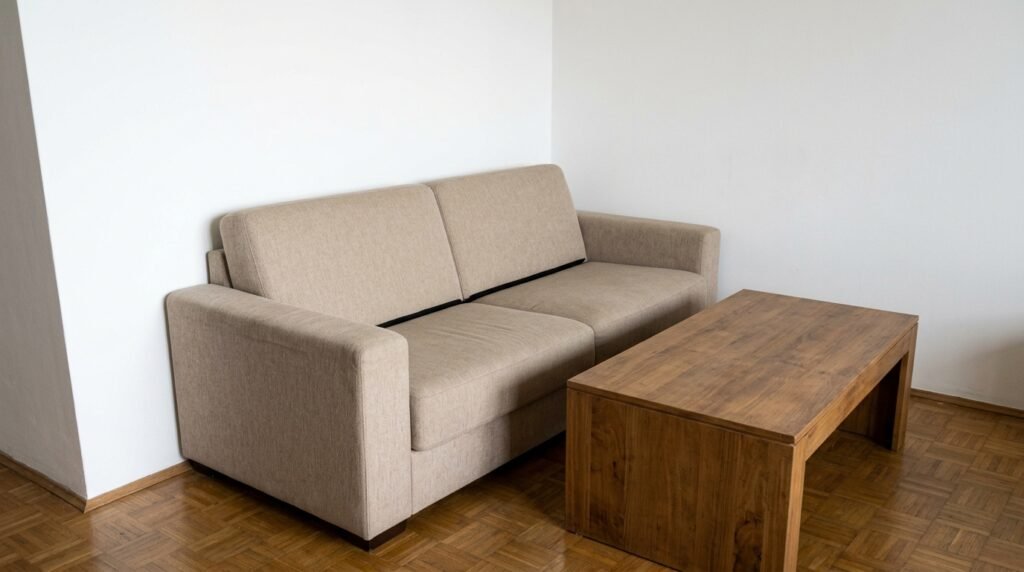
1. Pull your furniture away from the walls
Pushing a sofa flat against the wall remains a common mistake. It actually makes the room feel smaller and more rigid. Leaving a gap of just three inches creates the illusion of space. The shadow behind the furniture adds physical depth to the room.
I learned this the hard way in my first tiny living room. Everything sat shoved strictly into the corners. Moving the sofa forward made the whole area breathe. It gave the seating arrangement a cozy, deliberate feel instead of looking like a waiting room.
Creating clear pathways
Pulling furniture inward also forces you to evaluate your walking paths. You should never have to turn sideways to navigate your coffee table. Leave at least eighteen inches of clearance between your sofa and the table.
You can use the back of your floating sofa as a room divider. Place a narrow console table directly behind it. This creates a firm boundary between your living area and your kitchen. Finding the cheapest way to decorate a living room from scratch starts with getting this foundational layout right.
Softening the layout
A tight living room also benefits from round furniture. Swap a heavy rectangular coffee table for a round wooden one. The lack of sharp corners makes walking around the space much easier. You will stop bumping your shins on the edge of the table.
2. Hide your clutter in woven baskets
Open shelving looks great until real life happens. Charging cables, daily mail, and winter scarves pile up fast. I own an embarrassing number of woven baskets for this exact reason. They hide the mess while adding much-needed texture to the room.
Target always stocks great options in their home section. You can slide a large basket under a side table to hold extra blankets. Small ones fit perfectly on TV stands or bookshelves. They keep your daily items accessible but completely out of sight.
Matching basket shapes to your furniture
Square baskets maximize storage space on tight shelves. Round baskets look softer on the floor next to a rigid sofa. Mix different materials like water hyacinth and soft cotton rope. This prevents the room from looking too matched or boring.
You can also use shallow baskets as trays on your coffee table. They corral remote controls and coasters into one neat spot. It provides a visual boundary for loose items that usually float around the room.
3. Swap out the basic hardware
Rental kitchens usually feature the cheapest possible drawer pulls. Changing them takes five minutes and requires only a basic screwdriver. You just need to keep the old ones in a bag to swap back before you move out.
Matte black or brushed brass hardware updates old wood cabinets instantly. You can buy heavy-duty multi-packs on Amazon for very little money. Measure the distance between the drill holes carefully before you order anything.
Protecting your security deposit
Standard drawer pulls usually measure exactly three inches from center to center. Buying the exact same size means you avoid drilling new holes. This step remains crucial if you want to know how to decorate a rental apartment without losing your deposit.
Store the original screws in the same bag as the old hardware. New knobs often come with screws that are either too long or too short for older cabinets. You might need to reuse the original screws to make the new handles fit tight.
4. Hang window treatments high and wide
Tiny windows make a room feel cramped and dark. You can trick the eye by installing your curtain rod close to the ceiling. Extend the rod at least six inches past the window frame on each side.
This makes the ceilings appear much taller than they really are. It also allows more natural light in when the curtains sit fully open. Buy curtains that gently brush the floor for a tailored look. High-water curtains will make your walls look short and awkward.
Upgrading cheap curtain panels
Basic budget curtains often look thin and flimsy out of the package. You can fix this by buying twice as many panels as you think you need. Bunching four cheap panels on one window creates a thick, custom look.
Use iron-on hemming tape to fix the length without sewing a single stitch. Fold the excess fabric under and iron the tape to secure the hem. It takes ten minutes and makes twenty-dollar curtains look custom made.
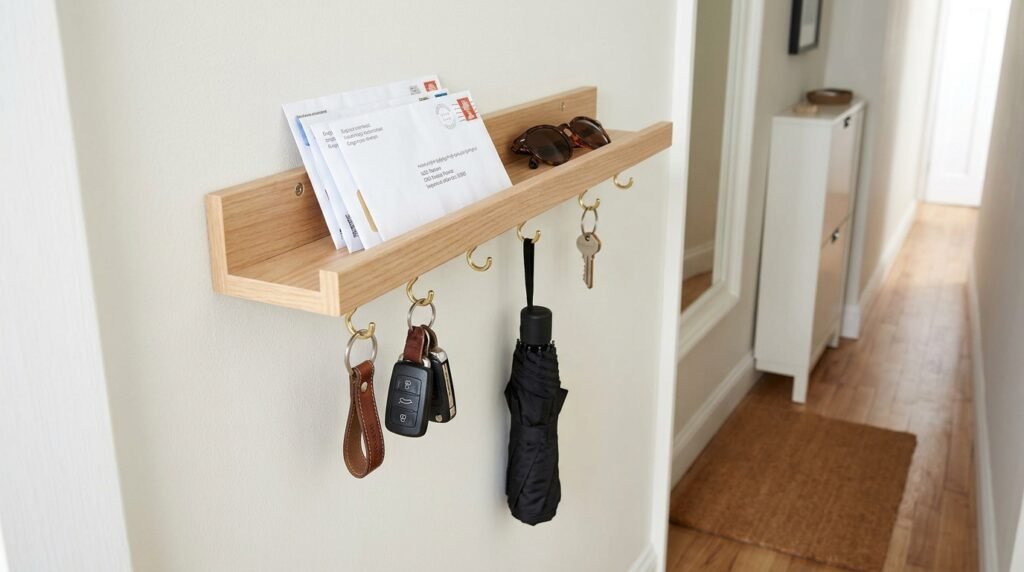
5. Mount a picture ledge upside down for keys
Here is a practical trick I use in every tight entryway. Buy a cheap MOSSLANDA wooden picture ledge from IKEA. Instead of mounting it normally, flip it completely upside down. The lip of the ledge now points down toward the floor.
You can attach small brass cup hooks to that downward-facing lip. This gives you a place to hang heavy keys and umbrellas. The flat top surface becomes a perfect shelf for outgoing mail and sunglasses.
Securing the shelf properly
This entire setup takes up almost zero physical space in a narrow hallway. Always use proper anchors when attaching wooden shelves to drywall. A falling shelf will definitely take a chunk of paint with it.
If your lease forbids screws, you need an alternative strategy. Learning how to hang things on walls without drilling holes saves a lot of headaches. Heavy-duty adhesive strips work surprisingly well for lighter entryway mirrors and small art.
6. Rely on large floor mirrors
Mirrors bounce light around dark rooms highly effectively. A large leaning mirror adds instant architecture to a plain rectangular box. Do not buy small mirrors and scatter them randomly on the walls. One massive mirror creates a much stronger visual impact.
I found a giant vintage mirror at a thrift store in Aurora for forty dollars. Wiping the heavy wood frame down and leaning it near my only window doubled the sunlight immediately.
Placement strategies for mirrors
Leaning the mirror means putting zero holes in the rental drywall. You can secure it with a small dab of mounting putty at the top corners. This prevents the frame from sliding if you bump into it.
If you have pets, leaning a mirror requires extra safety steps. You can buy heavy-duty furniture straps that adhere to the back of the mirror. These stick to the wall with strong adhesive and prevent the glass from tipping forward.
7. Use tension rods for hanging plants
I love having plants, but open floor space remains precious. Putting heavy pots on the ground eats up square footage fast. Drilling into the ceiling for hanging hooks often violates lease agreements.
A heavy-duty shower tension rod solves this problem completely. Fit the rod tightly inside a sturdy window frame. You can hang two or three lightweight trailing plants right from the bar.
Managing plant weight limits
My two pothos plants thrive hanging right in the living room window. Tension rods can only hold so much weight before slipping down the wall. Stick to plastic nursery pots instead of heavy ceramic ones for hanging plants.
Water your plants in the sink and let them drain completely. Wet soil adds surprising weight to a hanging basket. Wait until the pots feel light again before hanging them back on the rod.
8. Pick a strict color palette for large pieces
Small rooms cannot handle chaotic color schemes. Too many bright colors will make the space feel loud and busy. Keep your sofa, rug, and large furniture in solid neutral tones. You can add personality through smaller, easily swappable accessories.
My sofa is a basic charcoal gray that hides coffee spills easily. My rug features a simple cream and black geometric pattern. I bring in color strictly with dark green throw pillows and framed art prints.
Adding interest through texture
This approach keeps the visual noise low while maintaining a cozy atmosphere. Neutral definitely does not have to mean boring or sterile. Layer different fabrics to make the room interesting without adding bold colors.
Mix a smooth leather accent chair with a chunky knit cotton blanket. Add soft velvet pillows to a structured linen sofa for contrast. The eye registers the different materials as design details rather than clutter.
9. Use rugs to define the layout
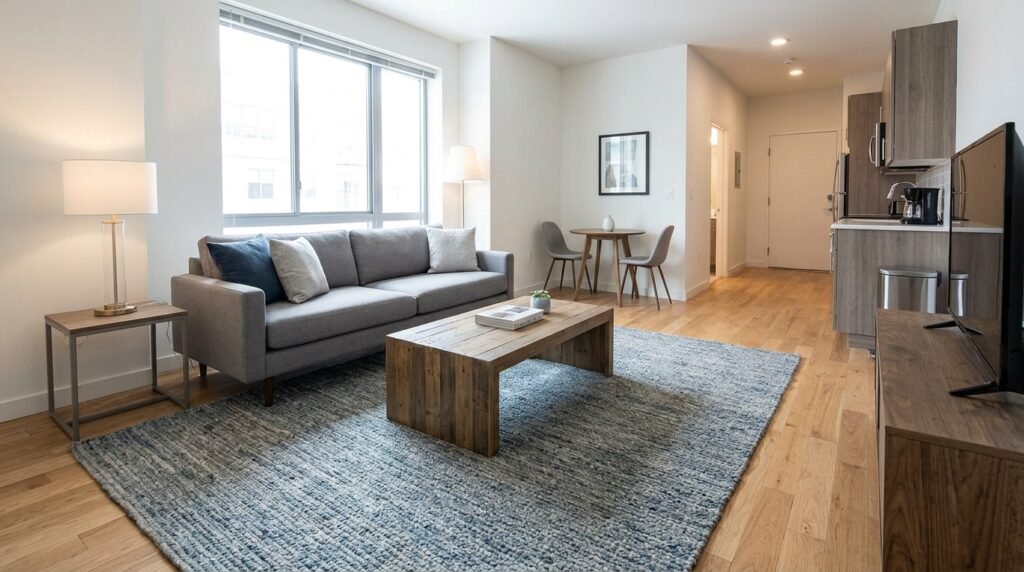
Most small apartments have one main living area. You sleep, eat, and watch television in the exact same room. A large area rug acts like an anchor for your furniture grouping.
Place a rug strictly under your front sofa legs and coffee table. It draws an invisible boundary on the floor. It tells the brain that this specific zone functions as the living room.
Choosing the right rug size
Do not buy a rug that looks like a postage stamp in the middle of the room. An undersized rug makes the entire room feel smaller. An eight-by-ten rug usually fits most standard apartment living rooms perfectly.
Leave the floor bare in the main pathways to keep the traffic flow open. This contrast between the soft rug and the hard floor reinforces the separate zones. It brings structure to an open floor plan without needing actual walls.
Making these small apartment decorating ideas work for you
You do not need to try every single tip at once. Pick one area that bothers you the most and start right there. Moving a sofa costs nothing. Organizing your daily clutter into a cheap basket takes just one afternoon.
Living in a compact space forces you to be highly creative. You learn to value the specific items you choose to bring inside. You stop buying random things because you simply lack the physical room.
Focus on practical changes that make your daily routine easier. A pretty room feels nice, but a functional room keeps you sane. Take your time putting it together and let the space evolve naturally.
Pull your sofa three inches away from the wall right now. Grab a tape measure and check the width of your kitchen cabinet handles. Take one physical step today to make your rental feel like your actual home.

Fabiana Moura is a decor enthusiast and renter based in Denver, CO. After five moves in eight years, she became obsessed with making small spaces feel like home — without renovation, without a big budget, and without losing the security deposit. At Inovaty, she shares everything she’s learned along the way.