
Advertisements
Trying to read a heavy hardcover while balancing on the edge of a lumpy sofa ruins the entire experience. You usually end up scrolling on your phone because the main living area feels too chaotic for actual focus. Building a dedicated reading nook in any small space feels completely impossible when you barely have room for a standard dining table. We convince ourselves that relaxing properly requires a massive house with a private library.
I used to read sitting directly on the floor of my tiny Capitol Hill apartment until my lower back ached completely. I thought buying more furniture would just crowd the room and block my front door. Finding an isolated corner to escape into a good book actually changes how you experience your rental. You do not need a massive library with built-in mahogany shelves to build a cozy retreat.
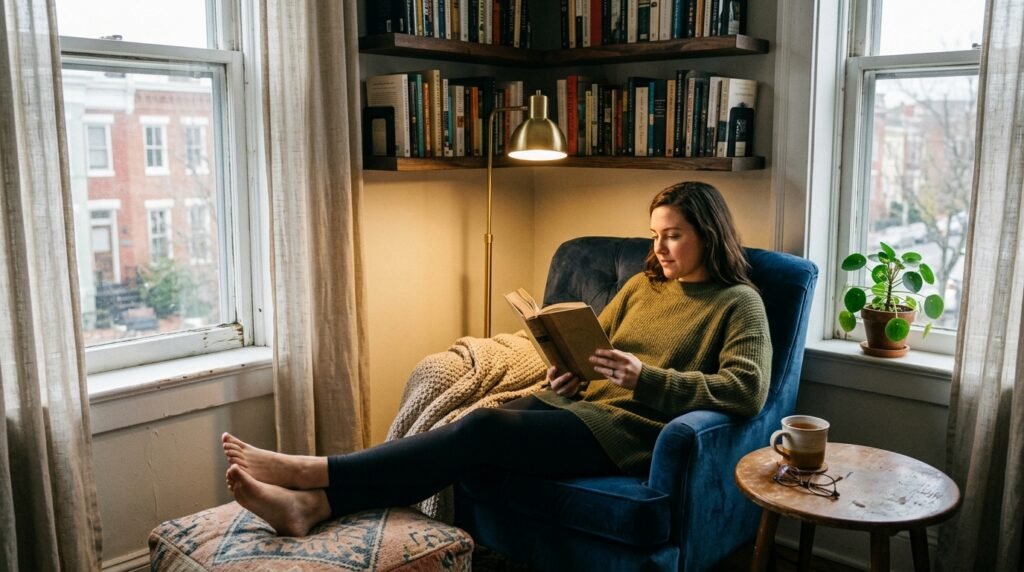
Step 1: Identify the awkward dead zones
You probably have at least one weird architectural corner that currently holds absolutely nothing of value. Look closely for the empty square footage behind a heavy armchair or the narrow gap next to your bedroom closet. Builders always leave these weird recessed pockets that frustrate renters to no end. Building a reading nook in any small space requires stealing these highly specific unused structural pockets.
You only need about three square feet of floor space to pull this off properly. Grab a roll of blue painter’s tape and mark a small square on the floor to visualize the footprint. Outlining the exact dimensions prevents you from buying furniture that blocks your main hallway.
Claiming the hidden space
I pushed my sofa forward about three feet and used the blank wall right behind it to build my personal hideaway. You just need enough floor space to fit a single chair and a tiny table securely. Mastering this spatial awareness directly complements knowing exactly how to divide a studio apartment into zones without walls. Setting physical boundaries makes a cramped apartment feel incredibly intentional and highly functional.
Anúncios
Step 2: Select a comfortable low-profile chair
A massive oversized recliner will instantly swallow a tight apartment corner and look completely ridiculous. You need a chair with exposed wooden or metal legs that allows light to pass directly underneath the frame. This simple visual trick stops the heavy furniture piece from blocking your sightline across the room.
Choosing a low-slung chair forces your eyes downward and makes the standard ceiling feel much taller. Avoid thick rolled arms that consume precious inches without adding any actual sitting room. A sleek armless slipper chair provides maximum sitting area within a highly minimal physical footprint.
Finding the perfect seating
I scored a mid-century modern accent chair at a Goodwill on South Broadway for exactly forty dollars. The slim profile fits perfectly inside my bedroom corner, but the deep seat provides serious comfort for long afternoon sessions. Designing a successful reading nook in any small space means prioritizing pieces that do not visually overwhelm the surrounding square footage.
Step 3: Layer the lighting for a reading nook in any small space
Relying entirely on harsh overhead apartment lights guarantees a terrible atmosphere for reading. You need a dedicated pool of warm light pointing directly at your book pages to prevent eye strain. A heavy floor lamp tucked tightly behind the chair takes up zero usable floor space.
Look for an arched floor lamp that stretches over your shoulder and focuses the beam straight downward. This highly directional light keeps the rest of the room dark and establishes a cozy perimeter. It signals to your brain that this specific corner exists solely for quiet evening downtime.
Selecting the right light bulbs
According to the design experts at Apartment Therapy, choosing a warm amber bulb creates an incredibly inviting and relaxing mood for evening hours. Buy a smart bulb so you can dim the light straight from your phone when your eyes get tired. Proper illumination completely transforms an awkward corner into a highly intentional architectural feature.
Step 4: Utilize vertical storage for your books
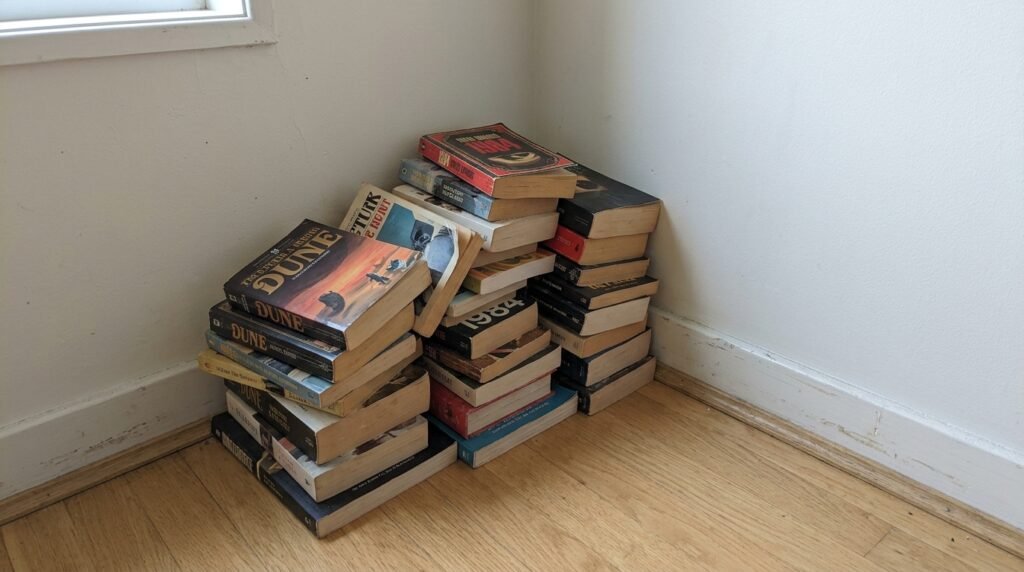
Leaving a messy pile of paperbacks directly on the floor makes the corner look like a temporary dumping ground. You need a dedicated spot to hold your current novels without taking up precious walking room. Installing a pair of thin acrylic floating shelves solves this exact storage problem immediately.
The transparent plastic completely disappears against the painted wall and makes the books look like they are floating. You can rest the heavy volumes face-out on the clear ledges to treat the beautiful covers as actual wall art. This strategy completely eliminates the need for a bulky wooden bookcase.
Displaying your collection beautifully
Keeping a tiny curated stack of books looks highly sophisticated and prevents the corner from feeling like a messy storage unit. If you already own a small wooden unit nearby, learn how to style a bookshelf without it looking like a mess to maintain the relaxing vibe. Editing your collection strictly remains a crucial habit when dealing with tight rental dimensions. Figuring out a reading nook in any small space demands aggressive organization at all times.
Step 5: Anchor the zone with thick textiles
A bare corner with just a single chair looks incredibly sad and totally unfinished. You must build a soft foundation to tell your brain this specific spot exists solely for extreme comfort. Placing a small faux sheepskin rug directly under the front chair legs grounds the entire setup instantly.
The fluffy texture breaks up the hard wooden floor and adds massive physical warmth to a sterile apartment. You can buy a cheap three-by-five rug on Amazon and layer it directly over the ugly rental carpet. Layering textiles provides the cheapest way to upgrade a boring beige box.
Adding physical warmth to the seat
Drape a heavy knit throw blanket casually over the back of the chair to soften the hard wooden angles. Finding 7 budget-friendly throw pillow combinations that look expensive gives you the perfect excuse to upgrade your old cushions. You have to introduce multiple fabric textures when you design a reading nook in any small space to maximize the cozy factor.
Step 6: Include a tiny surface for your coffee mug
You cannot balance a hot cup of tea on your knee while turning the pages of a thick novel. A dedicated resting spot remains absolutely essential for long weekend mornings and late nights. You do not need a standard heavy coffee table to fulfill this basic functional requirement.
Look for a C-shaped accent table that slides its base entirely under the chair legs. This brilliant design allows the top surface to hover right over your lap without consuming any extra floor space. It provides exactly enough room for a single ceramic mug and a pair of reading glasses.
Sourcing a narrow pedestal table
If you dislike modern metal tables, look for a tiny drink stand with a heavy marble base. Writers at The Spruce recommend using ceramic garden stools as heavy, stylish side tables inside tight living rooms. Establishing a highly functional reading nook in any small space requires creative alternatives to traditional bulky furniture.
Step 7: Keep the visual clutter hidden
Sitting down to relax becomes impossible if you are staring at a massive pile of unopened mail on the nearby counter. Your quiet zone must remain completely free of daily household stress and messy paperwork. You must build strict boundaries to protect this dedicated area from your chaotic daily life.
Never use your comfortable reading chair as a dumping ground for clean laundry or heavy winter coats. The moment you start stacking clothes on the seat, the space completely loses its relaxing magic. Treat the chair with respect and keep it completely empty when not in use.
Using woven baskets for organization
I use a large woven seagrass basket from Target to hold my messy laptop chargers and stray magazines. Slid tightly next to the chair legs, the basket hides the ugly clutter completely out of sight. A peaceful reading nook in any small space demands aggressive editing of your daily visual noise.
Step 8: Introduce natural elements for energy
Books and heavy fabrics absorb a lot of light and can make a dark corner feel a bit heavy. You need a pop of living energy to make the tight space feel fresh and inviting. Adding a small houseplant brings an organic shape that softens the rigid right angles of the walls.
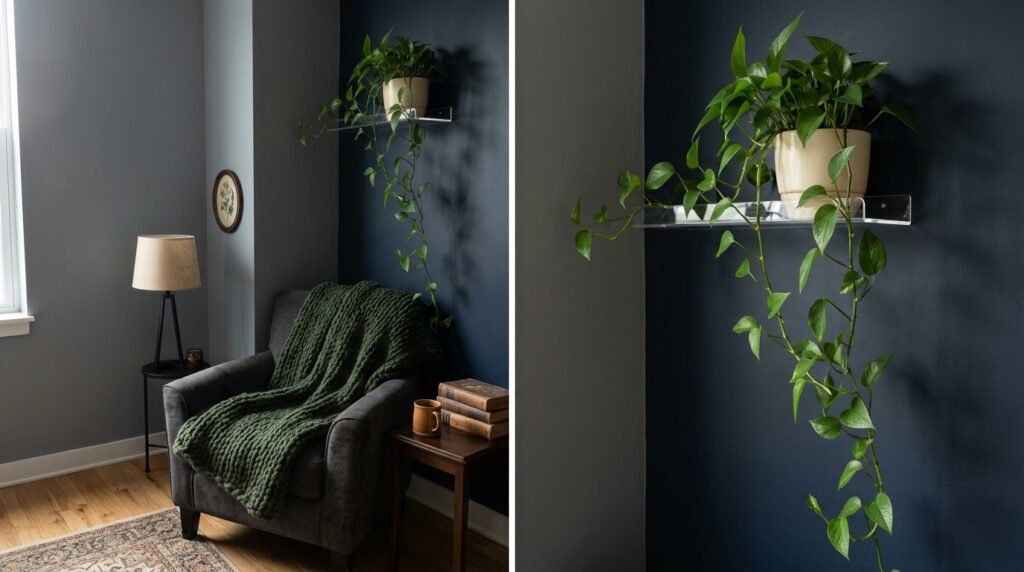
I own two trailing pothos plants and keep one sitting right on my acrylic floating shelf above the chair. The green leaves hang down beautifully and draw the human eye upward toward the ceiling. Plants forgive you completely if your apartment lacks massive bright windows.
Choosing low-maintenance greenery
Snake plants and ZZ plants thrive in dark corners and require water exactly once a month. Buying a cheap terracotta pot adds another beautiful natural texture to your quiet zone. Every successful quiet corner benefits massively from a little bit of natural living green energy.
Grab your favorite warm blanket and clear out that awkward dead corner behind your living room sofa this afternoon. Finding the perfect low-profile chair and a tiny side table turns wasted square footage into your absolute favorite retreat. You can build a highly functional reading nook in any small space and finally escape into those unread novels.

Fabiana Moura is a decor enthusiast and renter based in Denver, CO. After five moves in eight years, she became obsessed with making small spaces feel like home — without renovation, without a big budget, and without losing the security deposit. At Inovaty, she shares everything she’s learned along the way.