
Advertisements
Flimsy polyester panels hanging from a plastic tension rod instantly ruin a room. They cling to the window frame like a cheap shower liner. You might assume custom window treatments cost a fortune, but you can actually make cheap curtains look high-end with a few simple tricks.
I spent my first year in my Capitol Hill rental staring at terrible, wrinkly gray fabric. I refused to spend six hundred dollars on custom linen drapes that I would eventually leave behind. Property managers install terrible vertical plastic blinds before you move in.
The harsh plastic blocks out the sunlight completely or lets everyone see directly into your living space. You have to take control of your own window treatments to soften the room. You do not need to possess a sewing machine or a massive budget. A little physical effort goes a long way.
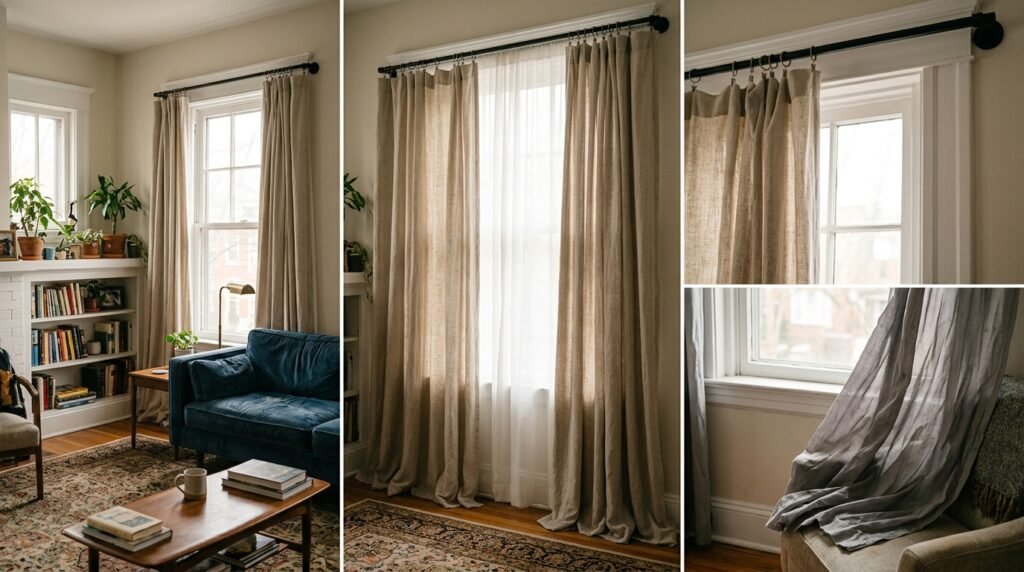
The core rules to make cheap curtains look high-end
You cannot just buy the absolute cheapest plastic fabric and expect miracles. You still need to start with a decent base material to trick the human eye. Avoid shiny synthetic fabrics that reflect harsh light.
Shiny polyester looks incredibly dated and feels rough against your hands. You want materials that closely mimic heavy linen, thick cotton, or rich velvet. These matte textures absorb the sunlight and hide cheap manufacturing flaws perfectly.
Anúncios
Target sells a beautiful cotton velvet line under their popular Threshold brand. One single panel costs about forty dollars depending on the exact length you buy. They feel significantly softer and look richer than cheap, shiny velvet options.
Choosing faux linen for a breezy look
Sometimes you want a light, breezy look for a small apartment living room. Faux linen provides that exact aesthetic without the massive price tag of pure Belgian linen. You just need to ensure the weave looks somewhat organic.
IKEA sells a pair of classic Ritva panels for roughly thirty-five dollars. These specific curtains possess a massive cult following for a very good reason. They feature a thick cotton blend that genuinely looks like heavy, expensive linen.
I used the white Ritva panels in my own bedroom for three solid years. They completely blow standard Amazon linen options out of the water. Amazon budget brands often use a loose, thin weave that feels scratchy and transparent.
Pre-washing your cotton blends
Always wash cotton blends before you measure and hem them. They will shrink up to two inches in the dryer. Pre-washing saves you from a massive headache later.
You do not want to hang your perfectly measured panels only to ruin them on laundry day. Follow the exact care instructions on the tag to preserve the fabric texture.
Mastering the height and width proportions
Retail stores sell standard panels that measure exactly eighty-four inches long. This standard length forces you to hang the metal rod right on top of the window trim. Hanging them low chops the wall perfectly in half.
It makes your standard eight-foot apartment ceiling feel incredibly short and cramped. You must buy the longest fabric panels available in the store. Look strictly for ninety-six or one hundred and eight-inch options.
Hanging the thick rod just one inch below the ceiling draws the eye straight up. This forces the entire room to feel significantly taller. For more structural layout tips, read about small living room furniture arrangement ideas that open up the space.
Extending the hardware past the window frame
Most renters mount their curtain rod brackets directly onto the wooden window trim. This restricts the fabric and covers up half of your precious natural light. You must stretch the hardware outward to create an illusion.
Extend the metal rod at least ten inches past the actual window frame on both sides. When you open the curtains, the fabric will rest against the bare wall instead of the glass. This makes your tiny apartment window look massive.
It also allows maximum sunlight to enter the room during the day. Maximizing natural light is absolutely crucial in a tight rental space.
Upgrading your basic installation hardware
A flimsy one-inch tension rod makes any beautiful fabric look completely terrible. The thin rod bows deeply in the middle under the weight of the material. You must install solid metal hardware to support a heavy look.
Buy a thick, heavy steel curtain rod that measures at least one and a half inches in diameter. The thicker rod visually commands the room and looks structurally permanent. Amazon Basics sells a great thick matte black rod for under thirty dollars.
Do not use the cheap plastic anchors included in the rod packaging. Buy heavy-duty drywall anchors from the hardware store to ensure the rod never rips out of the wall.
Avoiding the rod pocket completely
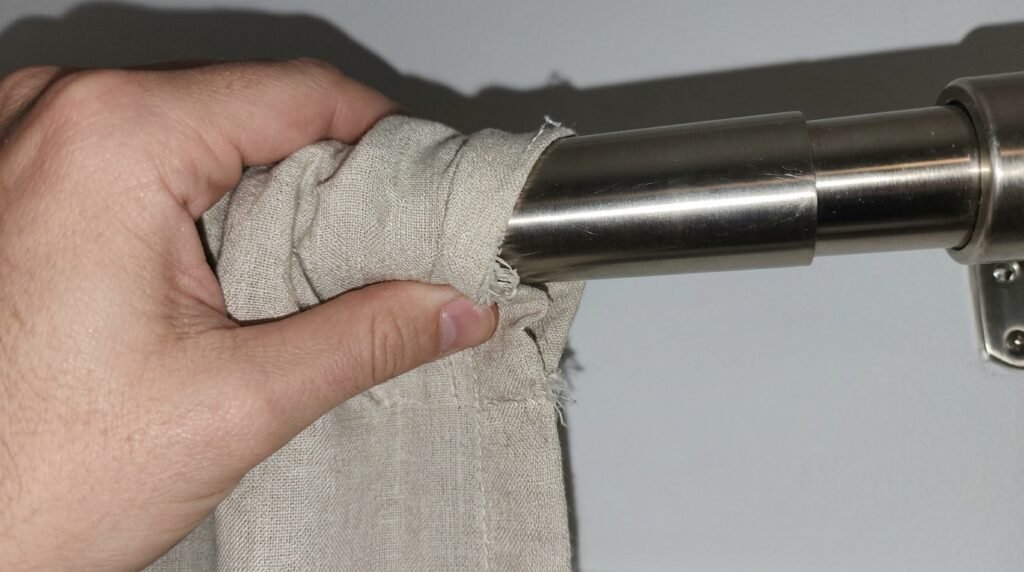
Never use the standard rod pocket designed into the top of cheap retail curtains. Shoving the metal rod through that tight fabric sleeve creates ugly, uneven bunching. It looks messy and makes sliding the fabric completely impossible.
You need to use back tabs or metal ring clips instead. Many cheap panels actually feature hidden fabric loops sewn onto the back. Threading the thick rod through these hidden tabs creates wide, uniform pleats.
Using metal pinch pleat rings
Sliding raw fabric directly over a metal rod creates a terrible scraping noise. It also slowly wears down the fabric over time. Heavy metal curtain rings solve this problem completely and add a jewelry-like detail to the window.
Buy a pack of heavy brass or matte black rings with attached metal alligator clips. Fold the top edge of your curtain into a neat one-inch pinch. Clip the metal ring directly onto that folded fabric pinch.
Repeat this entire process every four inches across the top of the panel. This forces the fabric into deep, structured folds that look exactly like custom French pleats. Taking time to adjust these specific details is the cheapest way to decorate a living room from scratch.
Adding heavy volume to thin fabrics
Single sheer panels look incredibly sad and extremely skimpy. They provide zero actual privacy and look like thin gauze stretched across the glass. You need massive volume to create a luxurious, hotel-like layered effect.
The secret involves buying double the amount of panels you think you actually need. If your small window requires two sheer panels, buy four identical panels instead. Thread all four panels onto the exact same metal rod.
The extra sheer fabric bunches together to create a lush, heavy wall of filtered material. It diffuses the incoming sunlight beautifully without looking sparse or cheap.
Masking ugly apartment blinds
Beautiful curtains look absolutely ridiculous sitting over cheap plastic apartment blinds. The harsh white horizontal lines fight aggressively against the soft vertical flow of your fabric drapes. You need to soften the actual window treatment sitting underneath.
I suggest pulling those plastic blinds all the way up and hiding them completely under a fabric valance. Install a cheap bamboo roman shade directly over the hidden plastic blinds.
The woven bamboo adds incredible warmth and natural texture to the entire room. You can soften the hard angles of a room using many clever tactics. For more rental upgrades, explore 7 budget-friendly throw pillow combinations that look expensive.
The hidden weight trick for structure
Custom luxury drapes hang straight down because they feature hidden lead weights sewn right into the bottom hem. Cheap retail panels completely lack this crucial heavy detail. They flare out at the bottom like an awkward bell shape.
You can fix this annoying structural flaw for under ten dollars. Buy a pack of heavy metal drapery weights from the local craft store. They usually sit right near the sewing machine accessories. Applying this tiny detail helps make cheap curtains look high-end instantly.
Securing the hem weights
Here is a highly practical tip that requires almost zero sewing skills. Cut a tiny slit in the bottom back corner of your curtain hem using sharp scissors. Drop one small metal weight directly into the fabric pocket.
Stitch the tiny slit shut with a basic needle and thread. The added physical weight pulls the fabric taut toward the floor. It creates a perfectly straight vertical line that looks highly professional.
Adding physical tension to the hemline mimics the heavy drape of expensive custom fabrics. It forces the cheap polyester or thin cotton blend to hang properly.
Training your fabric to behave perfectly
You cannot just hang wrinkled fabric straight out of the plastic shipping packaging. The deep fold creases from the factory never fall out on their own. You must use a hot iron with heavy steam to press the panels completely flat.
Once you hang the flat ironed panels, you must actively train the fabric to fall in neat folds. Open the curtains fully and arrange the pleats perfectly by hand.
The twine binding method
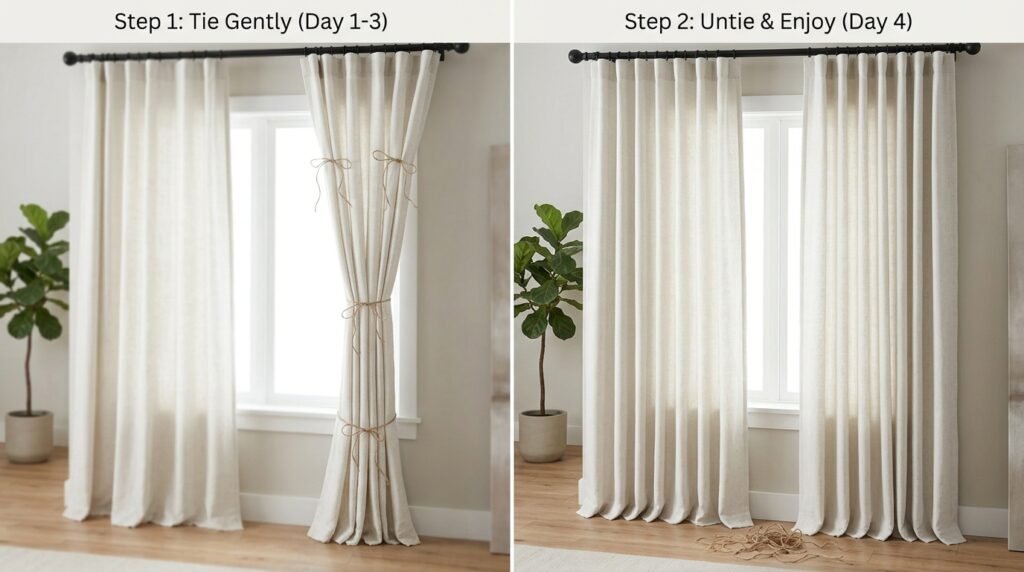
Use loose pieces of twine to tie the panels together gently at the top, middle, and bottom. Leave the twine tied around the fabric for exactly three days. The fabric actually memorizes this folded shape permanently.
Untie the strings on the fourth day and watch the material fall into beautiful, uniform columns. This single step costs nothing but patience and creates an incredibly polished finish.
It works exceptionally well on thick cotton or faux linen blends. Velvet panels require a lighter touch with the twine to avoid crushing the soft nap of the fabric.
Getting the floor break right
Custom tailored drapes never hover awkwardly two inches above the carpet. They need to interact with the floor precisely to look intentional. You have two highly acceptable options for a custom look.
The fabric should barely kiss the floorboards, sitting exactly a quarter-inch above the wood. Alternatively, you can let the fabric puddle generously onto the floor by adding two extra inches of total length.
Choosing between the kiss and the puddle
Puddling looks highly romantic and works beautifully in formal living rooms. It forgives uneven apartment floors completely. However, it collects pet hair and dust incredibly fast.
The kissing method looks much cleaner and makes weekly vacuuming significantly easier. I highly recommend the kissing method for anyone living with a shedding dog or cat. You avoid ruining the bottom hem with dirt.
Measure carefully from the curtain ring clip down to the floor to find your exact needed length. You can use cheap iron-on hem tape to adjust the length without sewing a single stitch.
Take your flimsy metal curtain rod down this weekend and reinstall it exactly one inch below your ceiling line. Iron your retail panels perfectly flat and use heavy metal ring clips to create custom pleats. These simple styling tricks provide the absolute best way to make cheap curtains look high-end on a strict budget.

Fabiana Moura is a decor enthusiast and renter based in Denver, CO. After five moves in eight years, she became obsessed with making small spaces feel like home — without renovation, without a big budget, and without losing the security deposit. At Inovaty, she shares everything she’s learned along the way.