
Advertisements
Staring at a massive stretch of builder-grade white paint gets depressing after a few months. Landlords love painting every single surface in flat white because it costs them almost nothing to maintain. You want to inject serious personality into your living room but staring at your strict lease agreement creates instant anxiety. Property managers constantly threaten massive fees for unauthorized changes.
When I lived in a cramped unit in Capitol Hill, the stark white walls gave the room the warmth of a hospital corridor. I desperately wanted a dark green focal point behind my gray Target sofa. I spent three weeks staring at paint swatches before finally buying a gallon of cheap Behr paint. That single weekend project completely changed how the entire room felt.
Planning your accent wall rental apartment project
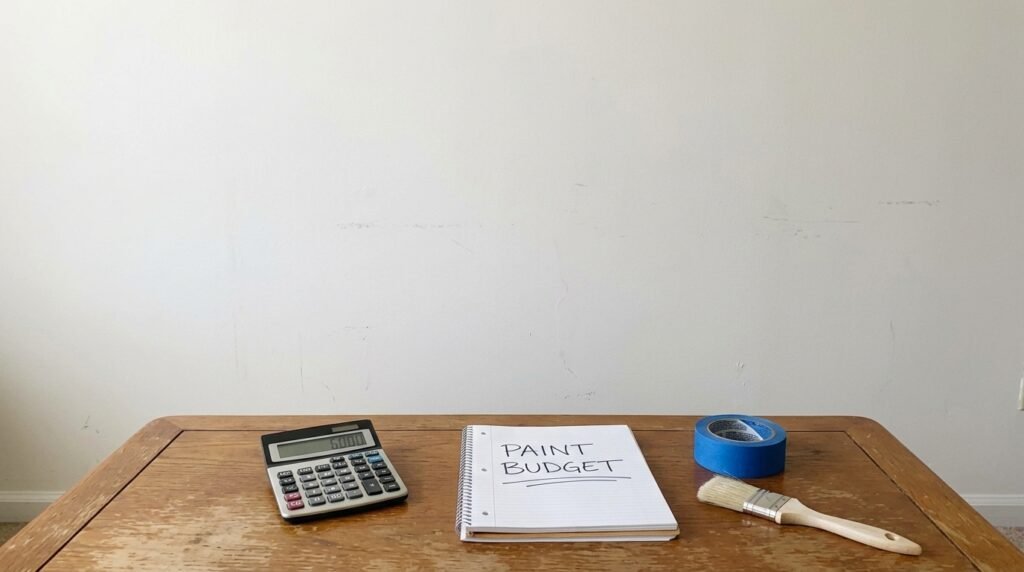
Before you buy a single drop of paint, you must do some basic math. Painting a wall costs money upfront and requires a specific exit strategy. You are essentially borrowing this wall for the duration of your twelve-month lease.
Property managers will absolutely charge you if you leave a dark wall behind. You have to factor the cost of a good white primer into your initial project budget.
A gallon of basic interior paint costs around thirty dollars. A gallon of heavy-duty primer costs about twenty dollars. You can execute this entire room upgrade for under sixty dollars if you shop smart. It takes exactly one weekend to paint the color on, and one weekend to paint it off.
Anúncios
Shopping the clearance paint section
Here is a highly practical tip that saves me massive amounts of cash. Go straight to the back of the paint department at Home Depot and look for the mistake rack.
Store employees constantly mix custom colors slightly wrong. They discount these brand new gallons heavily and stick them on a bottom shelf. You can often find gorgeous designer shades for nine dollars a gallon.
You must remain flexible with your specific color vision to use this trick. Finding the perfect dark navy blue on the mistake rack feels like winning the lottery. Even if you only find a warm terracotta or a soft sage, it still beats looking at hospital white.
Choosing the right wall to feature
Not every wall in your apartment deserves to be the center of attention. Picking the wrong surface makes the room feel lopsided and confusing. You want to anchor the room naturally.
Look for a solid wall that lacks weird architectural interruptions. A wall chopped up by two doors and a small window makes a terrible focal point. The paint color will look messy and disconnected.
Choose the solid wall directly behind your television console or your bed frame. This creates a strong visual backdrop for your largest pieces of furniture.
Considering natural light sources
Pay close attention to where your windows sit in relation to the chosen wall. Painting the wall that contains the actual window often makes the room feel much darker. The bright sunlight streaming in washes out the paint color completely during the day.
You want the natural light to hit the painted wall directly from the opposite side of the room. This direct sunlight illuminates the dark paint and shows off the true color beautifully.
Step 1: Prep the drywall correctly
You cannot just slap wet color onto a dirty apartment wall. Invisible cooking oils and daily dust coat every surface of your home. Paint refuses to stick properly to a greasy surface.
Take a damp microfiber cloth and wipe the entire wall down from the ceiling to the baseboards. Let the drywall dry completely for at least twenty minutes.
Fill any existing nail holes with a cheap tube of lightweight spackle. Sand the dry spackle perfectly flat before you even open the paint can. Skipping this step makes every single wall flaw highly visible. You can learn more about protecting your walls in how to decorate a rental apartment without losing your deposit.
The non-obvious painter tape trick
Blue painter tape bleeds constantly if you apply it incorrectly. You press it down with your fingers and think the edge is totally secure. Wet paint always finds a way to sneak underneath those tiny gaps.
Run the hard plastic edge of a credit card firmly along the tape line. This heavy friction seals the adhesive completely flat against the baseboard.
You will get a perfectly crisp line when you finally peel the tape away. Crisp lines separate a cheap amateur job from a messy disaster.
Protecting your cheap apartment flooring
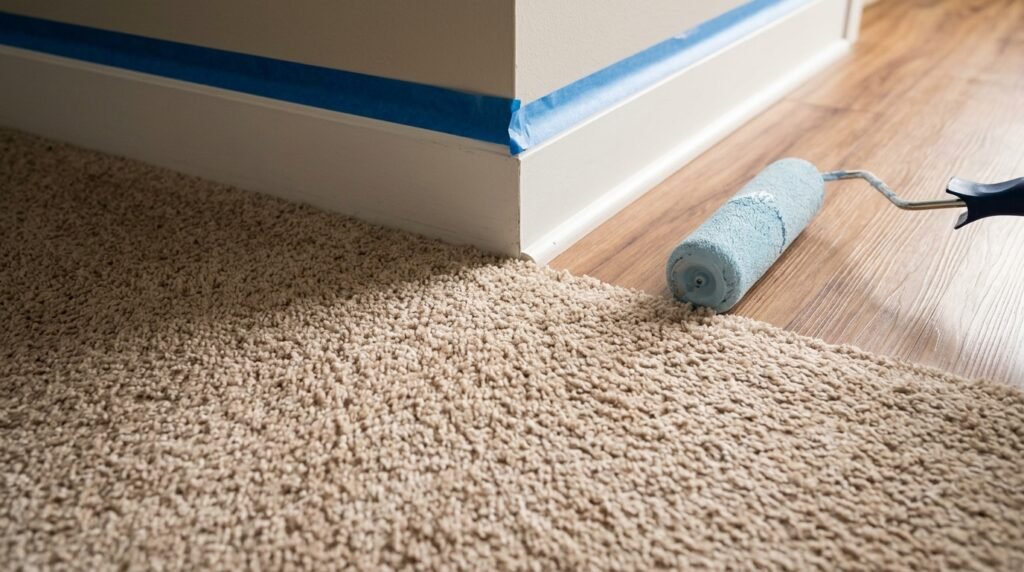
You cannot afford to ruin the beige carpet or the faux wood laminate. Paint splatters travel much further than you might assume when using a roller.
Do not buy thin plastic drop cloths from the paint aisle. They slide around constantly and trap wet paint against your shoes. You will end up tracking colorful footprints all the way into your kitchen.
Using canvas drop cloths instead
Buy a heavy canvas drop cloth instead of flimsy plastic. Canvas absorbs the accidental paint drips immediately so you cannot step in them. The heavy fabric stays perfectly flat against the carpet without sliding around.
If you do not want to spend money on canvas, break down large cardboard moving boxes. Tape them flat against the baseboards to create a rigid absorbent barrier.
Push your sofa into the absolute center of the room and throw an old bedsheet over it. Tiny paint specks float through the air and land on nearby fabrics constantly. Taking five extra minutes to cover your furniture saves you from ruining your favorite couch.
Step 2: Choose the best finish for your space
The paint finish dictates how the light bounces around your room. Flat paint hides drywall imperfections beautifully but scuffs the second you touch it. High gloss paint wipes clean easily but highlights every single bump on the wall.
Eggshell finish provides the absolute best middle ground for renters. It offers a soft, subtle glow without looking like shiny plastic. You can wipe it down with a damp sponge safely if you spill coffee.
Choosing the right shade requires testing the color in your specific lighting. You can find great inspiration in bedroom color combinations that work in small spaces. Always look at the swatch at night and during the day.
Gathering the cheapest tools
Do not buy the expensive aluminum extension poles at the hardware store. Buy a basic plastic roller cage and a cheap wooden broom handle. The wooden threads on a standard broom screw directly into the base of the paint roller.
You also need a high-quality angled brush for cutting in the edges. Do not cheap out on this specific brush. Cheap brushes shed coarse hairs directly into your wet paint.
A decent two-inch angled brush costs about eight dollars. Wash it thoroughly with hot water when you finish and it will last for years.
Step 3: Execute the perfect accent wall rental apartment technique
You must paint the tight edges of the wall before you use the big roller. Dip your angled brush into the can and carefully paint a two-inch border around the entire wall.
This process is called cutting in. It gives you a safe buffer zone so your large roller never accidentally hits the white ceiling.
Once the border is complete, load your roller with a generous amount of paint. Start at the top left corner and roll down in a massive W shape. Fill in the gaps of the W before moving to the next section. This technique prevents heavy vertical roller lines from showing up when the paint dries.
Storing tools between coats
Dark colors almost always require two full coats to look solid. You have to wait at least two hours between coats for the paint to dry.
Do not wash your roller and brush during this waiting period. Wrap the wet tools tightly in a plastic grocery bag and put them inside your refrigerator.
The cold air prevents the paint from drying out and ruining the brush. You can take them out two hours later and immediately start your second coat. This saves you a massive amount of cleanup time and wasted water in your tiny kitchen sink.
Step 4: Remove the tape while the paint is wet
Most beginners leave the blue tape on the wall until the next morning. The paint dries completely and forms a hard plastic bridge over the tape.
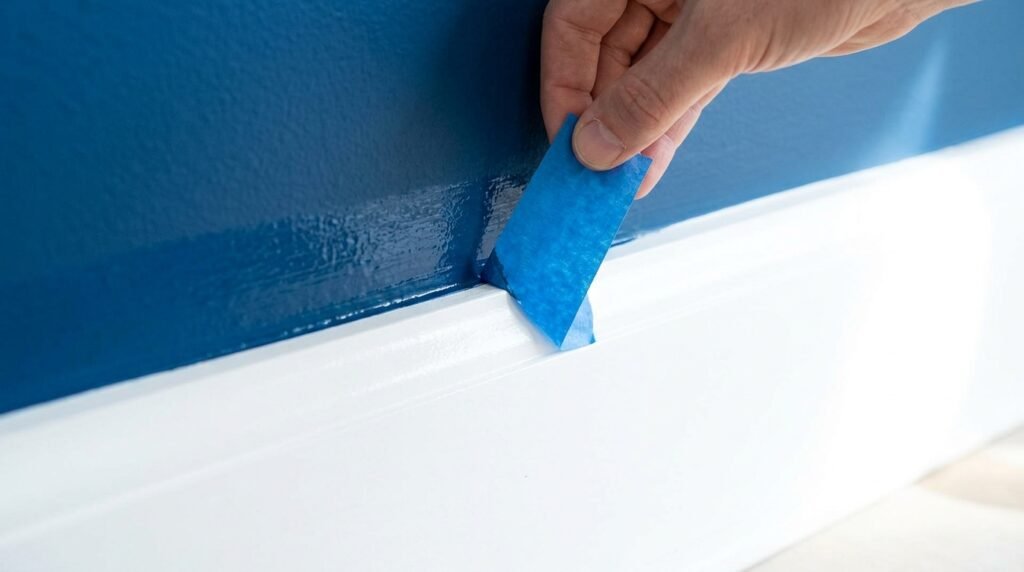
Pulling the tape off the next day rips huge chunks of dried paint off the wall. You must remove the tape while the second coat is still slightly wet.
Wait about thirty minutes after applying your final coat. Pull the tape down at a sharp forty-five-degree angle toward the floor. Go slowly and watch the crisp edge appear. Keep a damp rag nearby to catch any wet tape that falls against your baseboards.
Fixing accidental drips fast
You will inevitably drop a tiny speck of paint onto the carpet or the baseboard. Panic usually sets in immediately when you see blue paint on beige carpet.
Keep a package of wet baby wipes right in your pocket while you work. Baby wipes remove wet latex paint from almost any surface instantly. Wiping a fresh drip takes one second. Trying to scrub dried paint out of cheap apartment carpet takes three hours.
Step 5: Prepare for your eventual move-out
You must paint the wall back to its original boring state before you hand over your keys. Trying to hide a dark green wall is impossible without the right primer.
Buy a gallon of heavy-duty stain-blocking primer when you buy your moving boxes. Paint one thick coat of primer over your beautiful dark wall.
This blocks the dark pigments from bleeding through the final topcoat. If you skip the primer, you will end up painting four coats of white paint. It takes an extra hour of labor but saves you days of frustration.
Matching the original apartment white
Apartment walls are rarely pure white. Landlords use cheap contractor-grade paints that often have a slight yellow or gray undertone.
Peel a tiny square of the original paint off the wall from behind a light switch plate before you start the project. Take that tiny sample to the hardware store and have them color-match it perfectly. Buy a quart of this matching paint to use when you move out.
This ensures your freshly painted wall blends right into the other three walls. A little prep work makes this the $50 living room refresh that actually makes a difference without costing you a massive deposit penalty.
Go check the mistake paint shelf at your local hardware store tomorrow morning. Buy a discounted gallon of eggshell paint and a high-quality angled brush. Transform your boring living room this weekend and simply paint it back before your lease ends.

Fabiana Moura is a decor enthusiast and renter based in Denver, CO. After five moves in eight years, she became obsessed with making small spaces feel like home — without renovation, without a big budget, and without losing the security deposit. At Inovaty, she shares everything she’s learned along the way.