
Advertisements
Buying a massive monstera seems like a fantastic idea until it swallows half your living room. You trip over heavy ceramic pots every time you walk toward your tiny kitchen. Floor space acts as your most precious commodity in a tight rental unit. Figuring out how to add plants to a small apartment without losing your walking path requires serious strategy.
I learned this the hard way after moving into my Capitol Hill studio. I bought five bushy ferns from a local nursery and immediately felt trapped inside a messy jungle. You have to treat greenery just like any other piece of furniture you bring indoors.
Every single pot needs a dedicated footprint that makes actual geometric sense. You cannot just shove a heavy planter into an awkward corner and hope it survives.
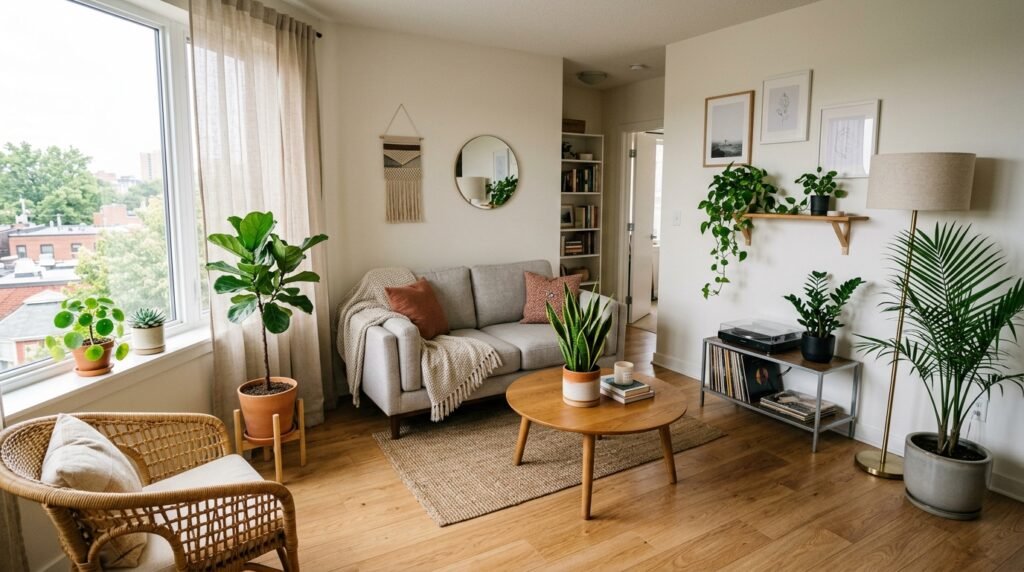
Step 1: Assess your light before adding plants to a small apartment
Do not buy a single pot until you know exactly which direction your windows face. A dark corner cannot support a sun-loving cactus no matter how much you water the soil. Forcing a high-light species into a dark room leads directly to a sad and dying mess.
Spend a Saturday tracking exactly where the sun hits your floor throughout the day. You will probably find that your usable bright spots are incredibly limited. This limitation actually helps you control how much greenery you bring home from the store.
Anúncios
Mapping the afternoon sun patterns
South-facing windows provide intense afternoon heat that scorches delicate fern leaves quickly. North-facing windows offer weak indirect light that barely sustains a basic snake plant. Knowing your exact exposure prevents you from wasting money on species destined to die.
You can download a free light meter app on your phone to measure the brightness accurately. Taking this scientific approach saves you massive amounts of frustration and guilt later.
Step 2: Push your greenery entirely off the floor
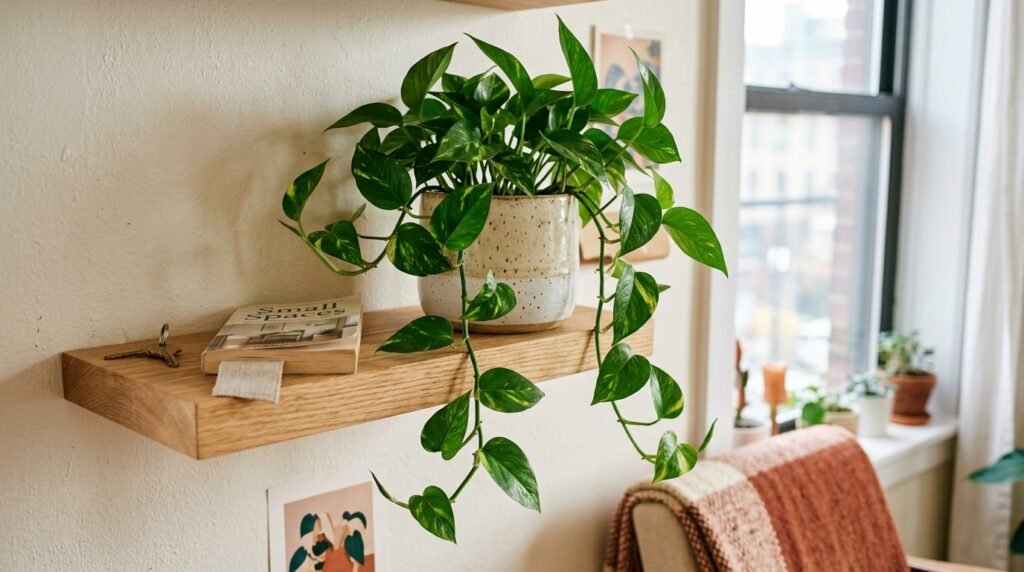
Leaving bulky terracotta pots on the ground eats up valuable square footage instantly. You have to force your eyes upward and utilize the empty walls instead. Mounting simple wooden ledges gives your greenery a dedicated home away from your main walking path.
I love placing my golden pothos on a high ledge so the long vines can trail downward. This specific setup draws the eye up toward the ceiling and makes the room feel much taller.
Embracing high-altitude displays
Understanding vertical space: the most underused trick in small apartments keeps your floor completely clear of dirt. You never want to accidentally kick a heavy ceramic pot while carrying a laundry basket.
Always use heavy duty wall anchors when installing floating shelves for heavy wet soil. A falling pot ruins your floors and guarantees a lost security deposit.
Step 3: Choose tall and narrow species
Wide ferns spread out horizontally and consume massive amounts of oxygen in a tiny room. You bump into the fragile leaves constantly when trying to squeeze past your sofa. Introducing plants to a small apartment means prioritizing tall vertical growth patterns instead.
Look for a snake plant or a tall ZZ plant to fill an awkward empty corner. These species grow straight up toward the ceiling without spreading outward into your usable space.
Avoiding the wide horizontal bushes
They also require very little water, which makes them perfect for busy renters who travel often. Their sleek vertical lines match modern apartment architecture perfectly without looking messy.
A tall narrow profile draws the human eye upward and fakes the look of high ceilings. You get maximum green impact with a minimum physical footprint on your floor.
Step 4: Hang lightweight pots from the ceiling
Hanging a macrame planter from the ceiling reclaims totally unused empty airspace. You just need to ensure you secure the heavy metal hook properly into a wooden stud. According to Apartment Therapy, always use a specialized toggle bolt when hanging heavy objects from hollow drywall ceilings.
A simple white hook disappears against the paint and leaves your window sills completely empty. Hanging plants to a small apartment window creates a beautiful natural privacy screen from your annoying neighbors.
Securing your suspended greenery safely
You get a lush green aesthetic without sacrificing a single inch of your dining table. Just make sure you use a pot with a solid bottom so muddy water does not drip onto your carpet.
Take the suspended pot down completely when it comes time for watering day. Let it drain in your kitchen sink for an hour before hanging it back up on the hook.
Step 5: Group your pots into one tight zone
Scattering tiny individual pots across every single flat surface makes the room look highly disorganized. Your eyes dart around the room wildly trying to process all the tiny green dots. Grouping three or four pots together in one specific corner creates a much calmer visual experience.
This creates a single lush focal point rather than a chaotic scattered mess. Clustering items correctly forms the basis of 9 small apartment decorating ideas that actually work.
Building a single lush focal point
You contain the inevitable dirt and fallen leaves to one specific area of the room. This makes your weekly sweeping and watering routine significantly easier to manage.
Using odd numbers works best when building these tight green clusters. Grouping three different heights together looks natural, while four pots look rigid and highly mathematical.
Step 6: Use cohesive planters to reduce visual noise
Mixing bright blue ceramic pots with orange terracotta and shiny plastic creates immediate visual chaos. The contrasting materials fight for your attention and make the tight space feel overwhelming. You need to streamline the containers to make the greenery feel like a permanent architectural feature.
I keep my two actual living plants inside matching natural woven seagrass baskets from Target. Bringing plants to a small apartment feels much cleaner when the containers match your existing furniture.
Sticking to a strict color palette
The identical baskets cost just twelve dollars each and hide the ugly plastic nursery pots completely. You just drop the cheap plastic pot directly into the beautiful woven basket.
If you prefer ceramic pots, paint them all the exact same matte color using basic craft paint. A uniform row of matte black pots looks incredibly expensive and highly professional.
Step 7: Repurpose your existing furniture as stands
You do not need to buy expensive dedicated stands to display your new greenery properly. Look around your living room for sturdy flat surfaces that currently hold useless clutter. The top of a heavy wooden bookshelf provides the perfect stage for a trailing philodendron.
According to the design experts at The Spruce, placing greenery on top of tall cabinets draws attention away from cramped floor plans. You just slide a cheap plastic drip tray underneath the pot to protect your wood from water damage.
Maximizing your flat functional surfaces
Fitting plants to a small apartment requires making your current furniture work double duty every single day. A sturdy metal bar cart can easily hold your drink glasses and a beautiful cascading vine.
You can also use a cheap wooden step stool from IKEA as a temporary riser. It elevates a short pot off the floor and gives it proper visual importance.
Step 8: Manage the humidity properly
Tropical varieties need high humidity to survive, but running a massive humidifier takes up too much table space. You can create a microclimate for your greenery without buying bulky plastic appliances. This highly specific trick saves you money and precious counter space immediately.
Fill a shallow ceramic dish with cheap aquarium gravel and pour a little water over the stones. Place your pot directly on top of the wet gravel so the evaporating water surrounds the leaves.
The simple pebble tray trick
Keeping the humidity high prevents crispy brown edges when you incorporate plants to a small apartment during the dry winter months. The roots stay safely above the water line while the leaves absorb the rising moisture.
This simple pebble tray trick requires zero electricity and fits perfectly on a narrow windowsill. It looks like a deliberate decorative choice rather than a desperate survival tactic.
Step 9: Use mirrors to double the green effect
You can make two lonely pots look like a massive greenhouse by placing a mirror strategically behind them. The reflection bounces the green leaves back into the room and amplifies the organic energy. You get double the visual impact without losing any more physical square footage.
Lean a tall floor mirror against the wall directly behind your grouped pots. This optical illusion solves the problem of how to make a dark apartment feel brighter without more windows.
Faking a massive indoor jungle
The glass reflects the natural sunlight directly onto the back leaves to help them grow faster. It brightens the entire dark corner and adds massive depth to a flat white wall.
Make sure the mirror sits securely against the wall so a heavy pot does not crack the glass. A simple rubber mat underneath the mirror frame keeps it from sliding on slick floors.
Step 10: Know exactly when to stop buying
Shopping at local nurseries becomes highly addictive once you manage to keep a few varieties alive. You start browsing local greenhouses every weekend and bringing home random cuttings from your friends. You have to establish a strict physical limit before the collection takes over your entire home.
Adding plants to a small apartment successfully means practicing aggressive self-control at all times. Give away a mature species to a friend if you want to try growing something brand new.
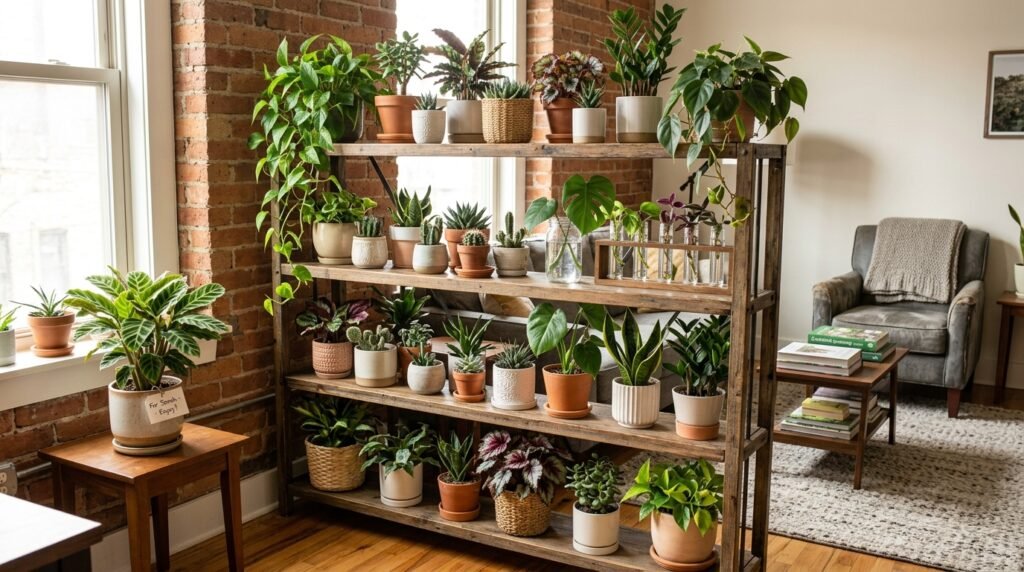
Editing your indoor collection aggressively
A highly edited collection of healthy greenery always looks better than thirty dying pots jammed onto a tiny windowsill. Quality always beats quantity when dealing with strict square footage limits.
Learn to appreciate the clean space between your pots as much as the pots themselves. Breathing room makes the entire apartment feel relaxed and deeply intentional.
Take a hard look at your tightest corners tonight and identify exactly where the morning sun hits. Buy a single tall snake plant this weekend and tuck it inside a natural woven basket. Planning your layout carefully allows you to add plants to a small apartment without sacrificing your comfortable daily routine.

Fabiana Moura is a decor enthusiast and renter based in Denver, CO. After five moves in eight years, she became obsessed with making small spaces feel like home — without renovation, without a big budget, and without losing the security deposit. At Inovaty, she shares everything she’s learned along the way.